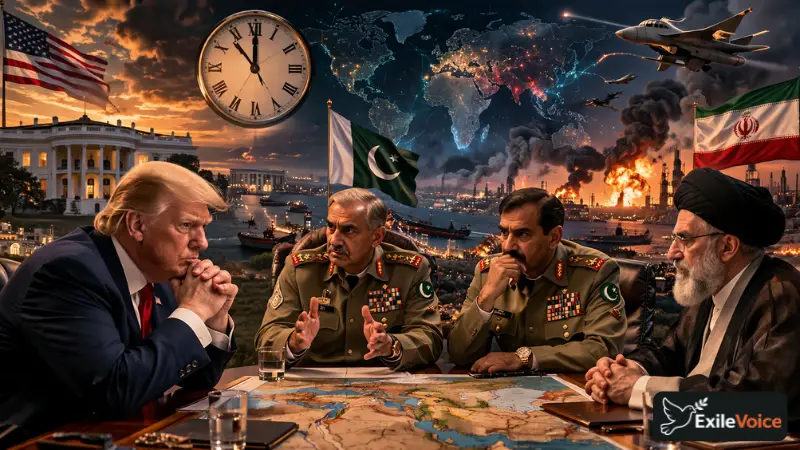
As of April 7, 2026, the world stands at a precarious geopolitical crossroads. U.S. President Donald Trump has issued a chilling ultimatum: a comprehensive "deal of his choice" with Iran must be reached by 8:00 PM Eastern Standard Time, or the United States will initiate a four-hour systematic destruction of Iran’s critical infrastructure. This moment represents a radical shift in international diplomacy, moving away from established legal frameworks toward a "Victor Takes All" doctrine reminiscent of ancient empires.
The proposed military action, described by analysts as "Infrastructure Day," targets power stations and bridges with the intent of paralyzing the nation. By destroying internal connectivity and energy grids, the strategy aims to isolate populations within cities, effectively shutting down all commerce, transport, and communication. Despite warnings that such actions may constitute war crimes under the Geneva Convention, President Trump has explicitly stated his lack of belief in international law, asserting that his own ethical boundaries are the only limitations on U.S. power.
In this high-stakes environment, an unexpected diplomatic player has emerged. Pakistan, traditionally viewed through a narrower security lens, is being recognized by mainstream international media as a responsible and mature interlocutor. The Pakistani military is playing a pivotal role as a messenger and mediator between Washington and Tehran. While some skeptics argue that Pakistan’s military is merely acting as a conduit for Trump’s demands to secure its own goodwill with the administration, the broader consensus acknowledges their essential role in preventing a total regional collapse.
Negotiations currently hinge on a 10-point proposal from Iran. Tehran is demanding a permanent ceasefire rather than a temporary 45-day pause, seeking guarantees from the U.S. Congress and the United Nations. A central point of contention is the revenue from the Strait of Hormuz. Iran proposes a joint supervision model with Oman, charging approximately $2 million per ship to fund national reconstruction. While President Trump initially signaled interest in this "substantive progress," his stance has since hardened, fueled by a desire for total concession and reports from regional allies, specifically Israel, Saudi Arabia, and the UAE, urging him to "finish the job." As the deadline looms, the question remains whether creative diplomacy can overcome the logic of absolute military force.