

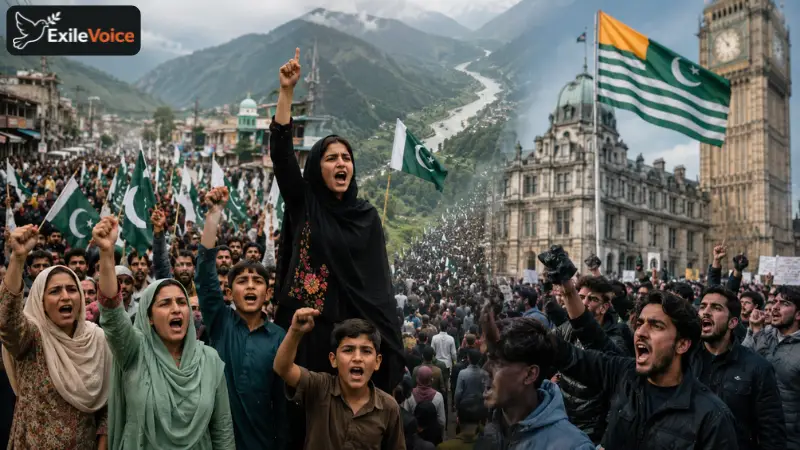
Recent developments in Azad Kashmir highlight a significant shift in political sentiment, characterized by intense public mobilization and a rising sense of sub-national identity. A strike called by the Joint Awami Action Committee on July 5, 2026, met with unprecedented success across several towns and districts, challenging the official narrative that the protest failed.
Unlike traditional political demonstrations that often remain confined to major urban centers, this movement saw participation across various smaller towns and rural areas, including Mirpur, Muzaffarabad, and Poonch. Notably, the involvement of women and children in large-scale street processions in these historically conservative regions suggests a profound shift in public consciousness. This mobilization is viewed by observers as a direct expression of a strengthening Kashmiri ethnic and sub-national identity, which appears increasingly detached from the conventional political discourse directed by federal authorities.
The unrest has extended beyond regional borders, with significant protests occurring in London outside the Pakistan High Commission. These demonstrations are particularly noteworthy because they represent a departure from historical patterns where the Kashmiri diaspora in the UK was primarily mobilized for causes directed or supported by Pakistan. The current protests, characterized by the participation of younger, second-generation Kashmiris, have been widely covered by international media, including Indian outlets, creating a new and complex dynamic in the international perception of the region.
The central question emerging from these events is the rationale behind the Pakistani establishment’s handling of this ethnic and political awakening. With local residents and observers expressing skepticism over the official government response, the situation remains highly volatile. The rise of this sub-national sentiment presents a fundamental challenge to existing political frameworks and suggests that the future political dynamics of Azad Kashmir will be driven increasingly by grassroots identity politics rather than traditional party affiliations.

