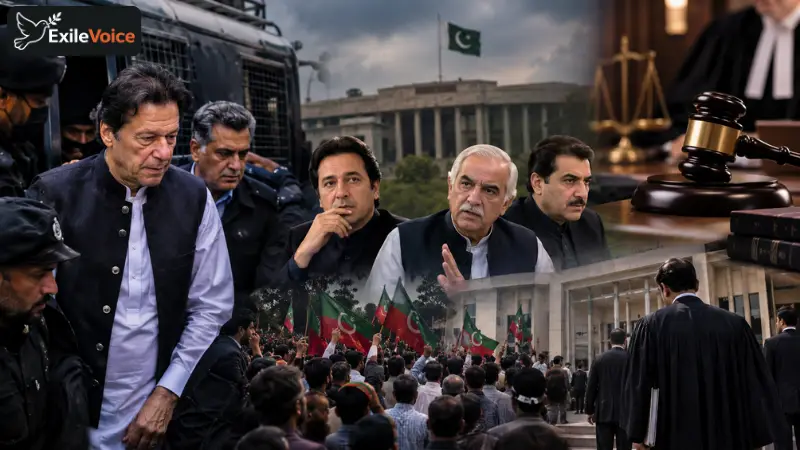
In a significant move that could alter the electoral landscape in Azad Jammu and Kashmir (AJK), the Pakistan Tehreek-e-Insaf (PTI) has officially announced its decision not to participate in the upcoming elections scheduled for July 27. This decision follows weeks of internal debate and mounting public pressure within the party’s ranks, culminating in a formal declaration by party leadership.
The decision is rooted in a fundamental challenge to the current political climate in the region. Party leaders have cited the ongoing instability, the recent suppression of civil movements, and the broader atmosphere of uncertainty as primary reasons for their abstention. By opting out, the PTI aims to register a protest against what it perceives as an environment hostile to fair democratic processes. For a party that has historically relied on high-energy grassroots participation, this move represents a strategic pivot, prioritizing political consistency over the desire for electoral office under what they term "constrained circumstances."
The legal background to this decision is equally complex. The AJK Election Commission had faced hurdles after a high court granted the PTI permission to participate, a decision the commission attempted to challenge in the Supreme Court. However, with the judiciary entering a break, the procedural path for these elections remains fraught with uncertainty. The PTI’s decision to voluntarily step aside serves to distance the party from the current administrative handling of the region. This withdrawal marks a departure from traditional electoral participation in AJK, suggesting that the party intends to focus its political capital on contesting the legitimacy of the process rather than competing within it.