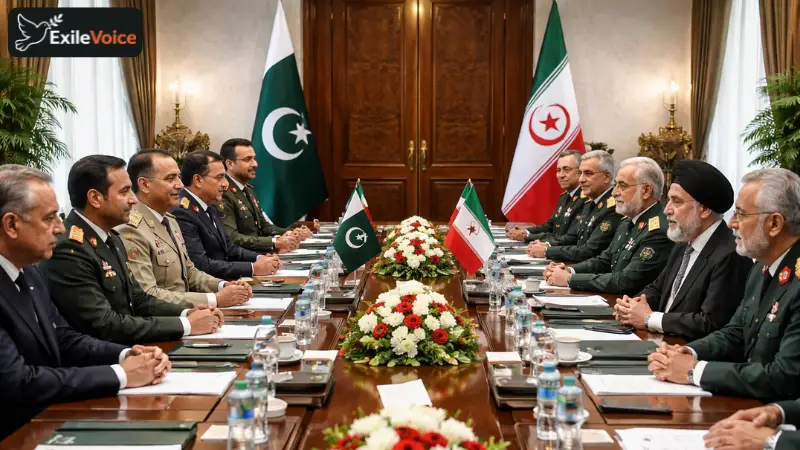
The recent high-level meetings between Pakistani military leadership and Iranian officials underscore a significant shift in regional security dynamics. At the heart of this interaction is the presence of the Director General of Military Operations (DGMO) in Tehran, a move that signals discussions have moved beyond mere diplomatic pleasantries into the realm of tactical and operational cooperation.
A noteworthy aspect of this evolving relationship is the mention of "Ummah Unity" in official Iranian statements, a term rarely used so prominently in past bilateral talks involving Israel. This suggests that the current security framework is being built not just on bilateral interests, but as a collective response to perceived regional threats. Iran’s expressed trust in Pakistan, contrasted with its deep-seated mistrust of the United States, positions Islamabad in a precarious yet powerful role as a regional "bridge."
The aerial dimension of this security arrangement has also come to light, with reports of Pakistan Air Force (PAF) assets potentially patrolling or providing cover during high-level transit. While social media narratives between the two nations sometimes clash over whose air force holds more "sway," the reality on the ground is one of mutual necessity. Iran’s air force, hampered by decades of sanctions, faces modern challenges that Pakistan’s more updated fleet can help mitigate in a collaborative security environment.
Furthermore, the inclusion of civilian officials like the Interior Minister in these security-heavy delegations serves a dual purpose. It addresses domestic concerns, such as cross-border movements and minority representation, while presenting a unified front to international observers. By showcasing a diverse leadership team, Pakistan is signaling to Iran that it understands the cultural and religious nuances essential for long-term stability.
As the ceasefire in Lebanon remains fragile and the shadow of broader conflict looms, the Pakistan-Iran security axis represents a critical stabilizer. The success of this partnership depends on whether both nations can navigate the pressure from external powers while maintaining the internal "jugaad" (resourcefulness) that has characterized their survival in a turbulent neighborhood.