The security landscape across South Asia is currently experiencing a period of intense volatility, marked by significant escalations in cross-border violence and internal insurgency. Recent events, particularly involving Pakistan, Afghanistan, and regional militant groups, suggest a shift away from traditional diplomatic mediation toward increasingly kinetic engagements.
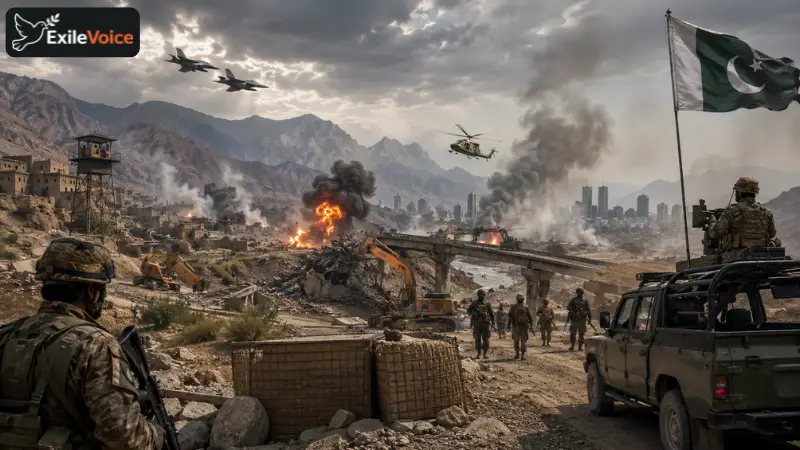
The recent attack on a paramilitary Rangers facility in Karachi, claimed by a splinter faction of the Tehreek-e-Taliban Pakistan (TTP), marks a dangerous expansion of operations into the country’s commercial hub. This incident, characterized by its complexity and use of suicide tactics, has prompted severe retaliatory measures. Pakistan’s subsequent air strikes across three Afghan provinces resulted in confirmed civilian casualties, a development that further complicates the already strained relationship between Islamabad and the Afghan Taliban. The intervention of the United Nations (UNAMA) highlighting civilian deaths underscores the precariousness of this "double-tap" approach to security and the difficulty of containing regional militancy without causing widespread collateral damage.
Beyond the immediate cross-border friction, the internal security situation within Pakistan remains critical. In Balochistan, the Balochistan Liberation Army (BLA) continues to demonstrate its capacity to disrupt infrastructure, as evidenced by recent videos showing the deliberate demolition of bridge infrastructure. These acts are not merely symbolic but serve as a direct challenge to the state's authority and its ability to secure vital economic zones, particularly those linked to regional investment corridors. The intersection of these insurgent activities with the broader geopolitical struggle, where the Taliban, the TTP, and other splinter groups manipulate nationalist sentiments to secure legitimacy, leaves Pakistan in a position where traditional statecraft struggles to maintain order.
Furthermore, the ideological divide between Pakistan and India continues to act as a foundational barrier to normalization. Analysts argue that beyond the immediate issues of border-sponsored terrorism or territorial disputes, the deeply embedded "two-nation theory" and the institutional reliance on maintaining a perpetual state of tension to justify the military's outsized political role remain significant obstacles. Until there is a fundamental shift in how the state defines its existential security and domestic legitimacy, the path toward a sustainable regional peace remains narrow. The combination of internal governance crises and persistent external threats creates a climate where escalation, rather than normalization, becomes the default trajectory.