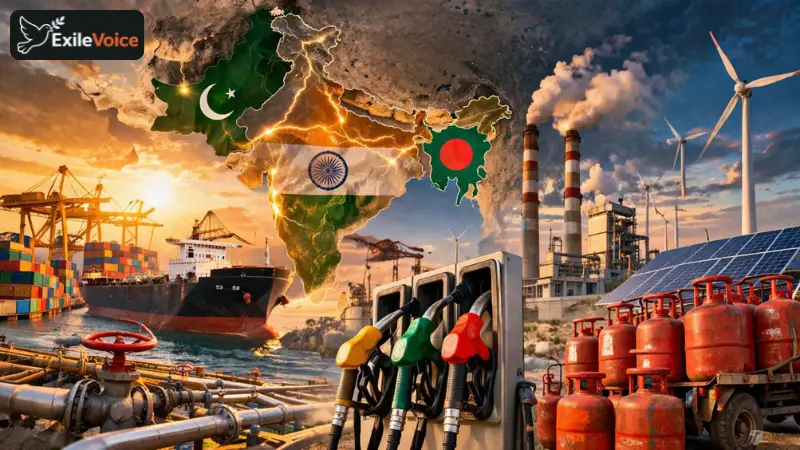
As global energy markets remain volatile, the major political economies of South Asia are grappling with a severe energy crunch that threatens domestic stability and industrial output. While Pakistan has dominated headlines due to extreme price hikes and "seesawing" subsidy policies, a regional comparison reveals that Bangladesh may actually be facing the most acute risk of "running dry."
Bangladesh’s vulnerability stems from its extreme dependence on imports; approximately 95 percent of its total oil and gas consumption is sourced from overseas, with two-thirds coming from the Gulf. Unlike India, which has a more diversified energy portfolio, or Pakistan, which has some indigenous coal and gas capacity, Bangladesh has seen a sharp decline in domestic natural gas production. In a move highlighting its desperation, Dhaka recently sought U.S. approval to import 600,000 metric tons of oil from Russia, a decision that risks its diplomatic standing with the West but is necessitated by a looming total fuel depletion.
In Pakistan, the crisis is characterized by political "zigzagging." The government has repeatedly announced price hikes only to partially withdraw them under immense public pressure, reflecting a "U-turn" policy style that creates market uncertainty. The country is caught in a conundrum: it must raise fuel prices to satisfy international lenders and stabilize the economy, but it fears the "angry protests" that typically follow such hikes. This domestic pressure is compounded by the perception that Pakistan’s strategic alliances, such as the defense pact with Saudi Arabia, have failed to provide a "safe passage" for discounted or guaranteed oil.
India, by contrast, faces a different set of challenges centered on Liquid Petroleum Gas (LPG). With over 300 million households relying on LPG for cooking, shortages in this sector have a more immediate impact on the common citizen than industrial fuel costs. While India has managed the macro-economic shocks better than its neighbors, the political cost of energy inflation remains a sensitive issue for the New Delhi administration. Across the region, the energy crisis has moved from a purely economic concern to a primary driver of domestic political unrest.