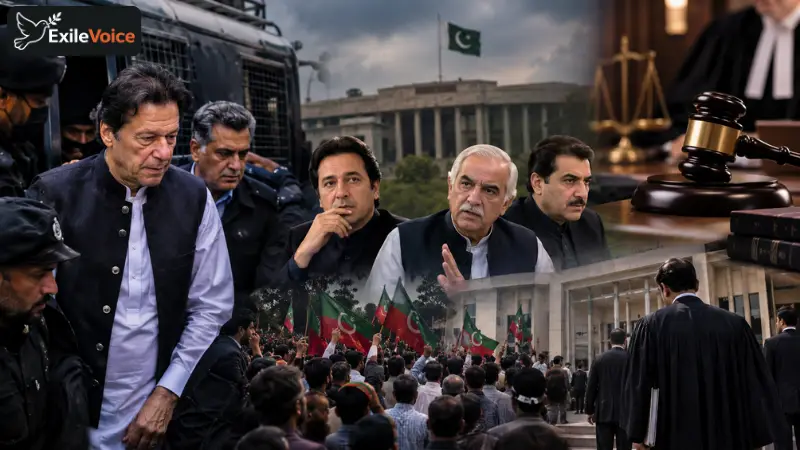
The governance framework of Khyber Pakhtunkhwa (KP) has entered a complex operational phase, highlighting deep-seated structural issues within the provincial administrative apparatus. Despite possessing a definitive public mandate under the leadership of Chief Minister Sohail Khan Afridi, who derived legislative authority directly from public support aligned with Pakistan Tehreek-e-Insaf (PTI), the provincial executive faces unprecedented operational constraints. Recent political developments reveal a widening disconnect between policy decisions made at the executive level and the ground-level execution carried out by the provincial police force. This tension highlights an ongoing friction between elected civilian leadership and ingrained institutional networks that operate under different chains of command.
A striking example of this administrative friction occurred along the strategic Naran highway, a crucial transit route connecting KP with northern territories including Gilgit-Baltistan. On-the-ground reports and video evidence documented by party representatives reveal arbitrary blockades established by local police units. Law enforcement personnel were observed utilizing heavy earth-moving machinery to deliberately place snow barriers across functional roadways. This engineered obstruction was reportedly designed to disrupt the mobility of senior political figures, including prominent legal and political leader Salman Akram Raja, alongside general travelers and tourists. The systemic nature of these blockades, spanning up to five successive checkpoints, suggests an administrative coordination that operates independently of the Chief Minister’s office.
The operational autonomy demonstrated by the KP police presents a severe institutional dilemma for Chief Minister Sohail Afridi. Observers note that while the provincial cabinet formally commands the law enforcement machinery, the actual execution of authority appears influenced by external, non-civilian power centers, often referred to within political circles as bureaucratic and security-driven counterweights. This internal misalignment was highlighted when senior leadership had to intervene personally to secure safe passage for stranded political figures, an intervention that subsequently resulted in the retaliatory suspension of lower-tier police officers who complied with executive orders. Such structural fragmentation severely undermines the constitutional authority of an elected provincial government and limits its capability to execute policy uniformly across its jurisdiction.
The consequences of this administrative impasse extend far beyond regional political friction, posing a direct threat to KP's economic landscape. The deliberate disruption of transit routes during the peak summer season has crippled the regional tourism sector, which serves as an economic lifeline for thousands of local families and small businesses. By weaponizing administrative infrastructure for political containment, the institutional deadlock not only erodes governance credibility but also inflicts severe financial strain on the civilian population, underscoring the urgent need for a comprehensive constitutional realignment between elected authorities and the state apparatus.