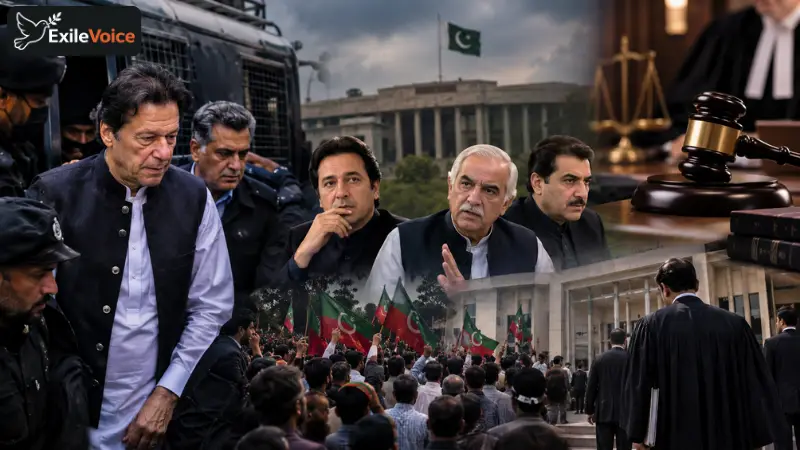
The discourse surrounding governance and accountability in Pakistan often finds itself tethered to historical grievances and recurring allegations of human rights violations. Recent political commentary has drawn parallels between contemporary events and past incidents of alleged state misconduct, emphasizing a persistent culture of impunity. These discussions frequently center on the accountability of political parties and the role of state institutions in addressing, or obscuring, serious accusations.
Historical cases, such as the 1991 allegations involving Veena Hayat, the experiences of film star Shabnam during the Zia-ul-Haq era, and the 2005 case of Dr. Shazia Khalid, are often invoked to illustrate a pattern where political or military interests override the demand for justice. These narratives suggest that regardless of the governing party or the era, systemic mechanisms often prioritize the protection of elite interests over the grievances of individuals.
The current political landscape, characterized by accusations against the ruling party, continues to be shaped by these historical precedents. Observers note that when allegations arise, ranging from financial misconduct to severe human rights claims, the standard response has historically been the formation of internal committees or the issuance of "clean chits," which rarely satisfy the public demand for independent inquiry.
The reliance on state institutions to investigate their own members or allies remains a contentious issue. The suggestion that certain cases should be referred to specialized counter-terrorism or investigative departments is often met with skepticism, as critics question whether these bodies possess the independence to act impartially. As the country navigates its current challenges, the intersection of political maneuvering and the quest for genuine justice remains a primary concern for civil society. The ongoing debates signify a deeper desire for institutional reform, moving away from a legacy of selective accountability toward a system where the rule of law is applied consistently, regardless of political affiliation or status.