The stability of Pakistan has historically rested on the delicate management of its diverse religious fabric. However, under the leadership of Chief of Army Staff (COAS) General Asim Munir, new questions have emerged regarding the state’s role in navigating, or inadvertently widening, the country's sectarian divides. Since his appointment in late 2022, General Munir has faced a unique set of challenges, ranging from a collapsing economy to a fractured political landscape. Yet, perhaps the most sensitive issue is the perception of a shifting state policy toward the Shia and Sunni populations, a dynamic that risks undoing decades of efforts toward religious harmony.
A significant point of contention arose during the very process of his appointment. Reports surfaced that political and military rivals attempted to influence external stakeholders, specifically Saudi Arabia, by highlighting General Munir’s personal background and alleged sectarian affiliations. While such rumors were largely dismissed as tactical maneuvers by competitors, they set a precedent for sectarian identity being used as a political weapon at the highest levels of the establishment. This "identity-checking" has trickled down into the public discourse, where the General’s decisions are increasingly viewed through a sectarian lens, regardless of their actual intent.
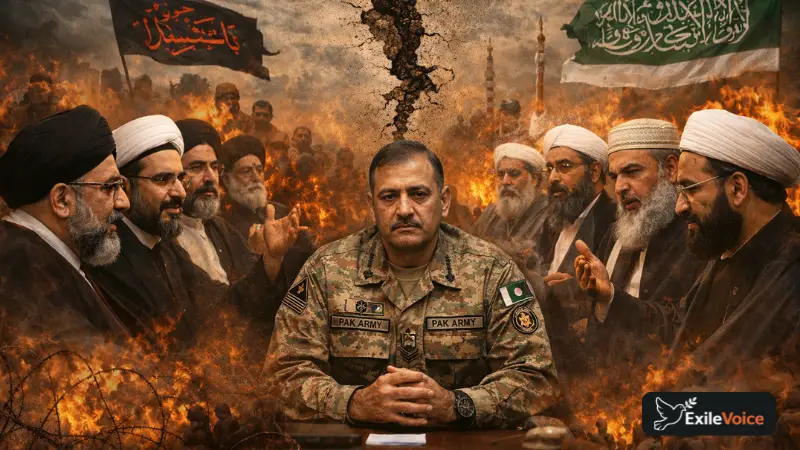
Professionally, analysts suggest that the military's current strategy involves a complex "balancing act" that may be backfiring. On one hand, the establishment has sought to cultivate ties with Shia scholars and Ulema to manage domestic fallout from the escalating Iran-Israel conflict and to ensure internal security during high-tension periods like Muharram. On the other hand, the state’s continued reliance on certain ultra-orthodox Sunni groups for political leverage has created a sense of marginalization among the Shia minority. This perceived favoritism, or the lack of a cohesive, pluralistic narrative, has allowed extremist elements on both sides to find oxygen.
The story of the "Shia-Sunni lines" is also one of regional geopolitics. With Pakistan caught between its strategic partnership with Sunni-led Saudi Arabia and its complex border with Shia-majority Iran, any internal sectarian friction has immediate foreign policy implications. Critics argue that by failing to distance the office of the COAS from sectarian optics, Munir has allowed the "two-nation theory" to be turned inward, effectively partitioning the national psyche. If the military continues to be seen as a partisan actor in religious affairs rather than a neutral arbiter, the risk of a "triangle of exhaustion", where the army, the clergy, and the public are in constant friction, becomes an existential threat to the Republic.