In the complex and often tumultuous history of Pakistan, the narrative of patriotism and power has frequently intersected in ways that highlight deep-seated systemic challenges. A poignant comparison arises when examining the lives and deaths of two significant figures: Captain Colonel Sher Khan and Zulfikar Ali Bhutto. While separated by two decades, their stories serve as a mirror for the shifting dynamics between military duty and political governance in Pakistan.
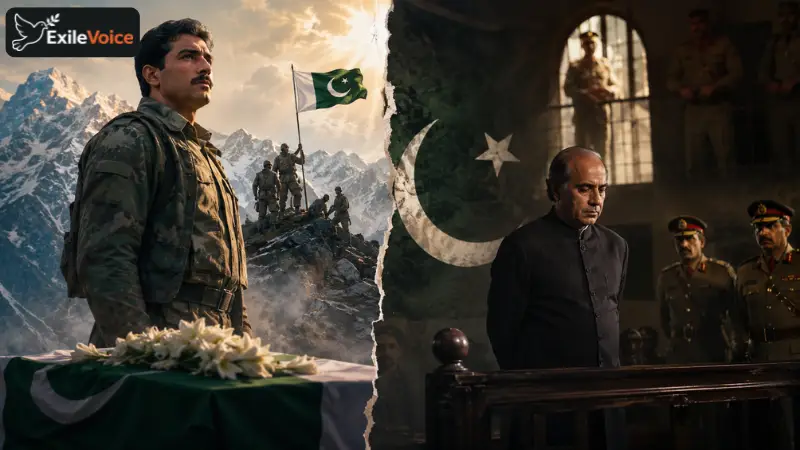
Captain Colonel Sher Khan, a recipient of the Nishan-e-Haider, stands as a symbol of unparalleled bravery. Martyred on July 5, 1999, during the Kargil conflict, his sacrifice was so profound that even his adversaries recognized his valor. Reports from the time indicate that Indian military officers documented his extraordinary courage, suggesting that Pakistan bestow upon him its highest honor. This serves as a testament to military excellence conducted under the banner of national defense.
Conversely, the story of Zulfikar Ali Bhutto, the former Prime Minister of Pakistan, highlights the internal struggles of the state. Executed on April 4, 1979, through a judicial process widely scrutinized for its impartiality and integrity, his end came at the hands of the domestic military establishment rather than an external enemy. This juxtaposition, one figure fighting on the border, the other becoming the subject of internal political strife, illustrates the historical tension that has plagued Pakistan’s governance.
Critics often point to the Kargil conflict itself as a point of contention regarding leadership and strategic planning. Former Prime Minister Nawaz Sharif described the event as a "misadventure" and an act that compromised the nation's integrity, suggesting a disconnect between political leadership and military strategy. When prominent figures, including retired high-ranking military officials, openly discuss the planning and the subsequent handling of the fallen, it creates a public discourse regarding accountability.
The tragic reality is that while the nation honors its fallen soldiers on the border, the internal political apparatus has often been embroiled in controversies surrounding judicial independence and the treatment of former leaders. The comparison between the treatment of a martyr’s remains and the controversial circumstances surrounding a political figure’s final rites underscores a recurring theme of institutional imbalance. These historical narratives continue to influence public sentiment, as citizens grapple with the legacies of figures who represent different facets of the Pakistani experience.
Understanding these historical arcs is essential for any professional analysis of contemporary Pakistan. The country’s trajectory remains tethered to these unresolved questions of civilian-military relations and the pursuit of institutional integrity, topics that continue to shape the national dialogue.