

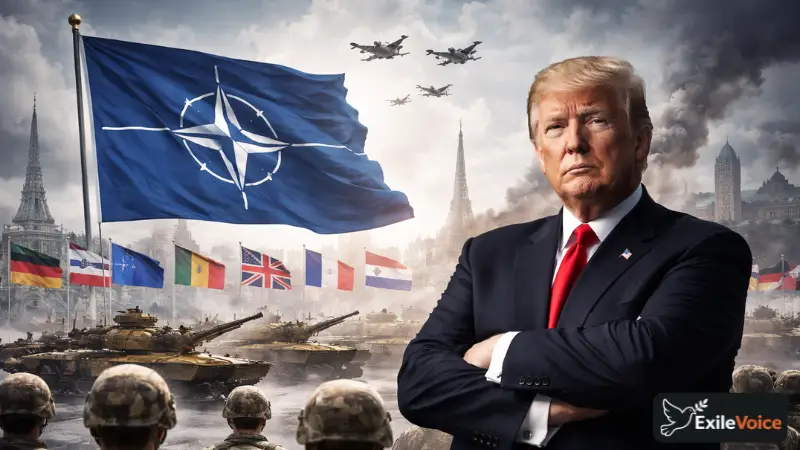
The geopolitical landscape is witnessing a seismic shift as President Donald Trump intensifies his critique of the North Atlantic Treaty Organization (NATO). In a series of recent developments, the Trump administration has signaled a potential "beyond reconsideration" withdrawal of U.S. forces from European soil. This stance marks a historic departure from decades of transatlantic security cooperation and highlights a growing rift between Washington and its traditional European allies.
The friction reached a new peak following a closed-door meeting between President Trump and NATO Secretary General Mark Rutte. While Rutte characterized the discussion as "frank" and defended European contributions, noting that allies provide essential bases, logistics, and overflight rights, Trump remains vocally disappointed. The President has labeled NATO a "paper tiger," arguing that the alliance has failed to support the United States in critical moments and cannot be relied upon for future conflicts.
Currently, the U.S. maintains a significant military footprint in Europe, with estimates ranging from 80,000 to 100,000 personnel. This includes approximately 35,000 troops in Germany, 12,000 in Italy, and 10,000 in the United Kingdom. A total withdrawal would not only leave a massive security vacuum but also force European nations to rapidly accelerate their own independent defense capabilities, a move already being advocated by leaders in France and Spain.
Adding to the tension is Trump’s lingering resentment over the "Greenland" incident, where European leaders resisted his interest in acquiring the territory. Trump’s rhetoric suggests that he views international alliances through a transactional lens, insisting that "pressure" is the only language European partners understand. As the U.S. contemplates pulling back, the very foundation of the post-WWII international order hangs in the balance, potentially leading to a more fragmented and unpredictable global security environment.

