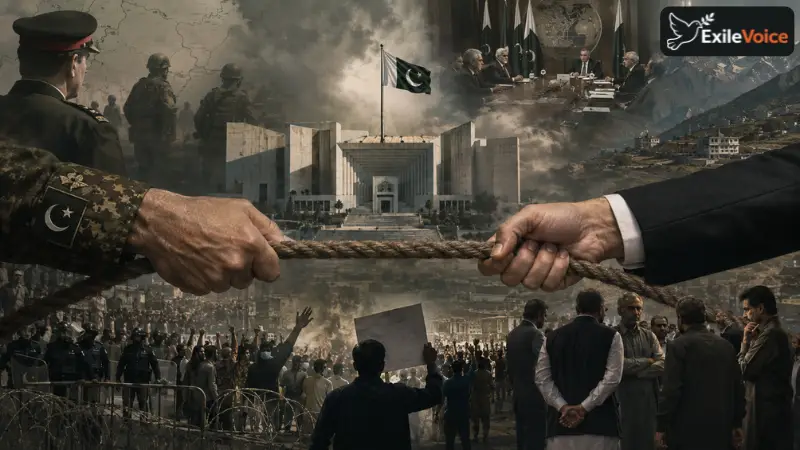
The current political situation in Pakistan is characterized by a high degree of tension between civilian leadership and the military establishment. Recent developments indicate that the country is navigating a complex web of governance challenges, internal security pressures, and external geopolitical involvements.
The primary area of contention revolves around the perceived role of military generals in domestic politics. Reports suggest that the establishment has initiated investigations into corruption allegations against key political figures, including members of the Pakistan Muslim League-Nawaz (PML-N) and the Pakistan Peoples Party (PPP). Observers view these actions not merely as routine accountability measures but as tactical leverage to ensure cooperation on legislative agendas, such as the proposed 28th constitutional amendment.
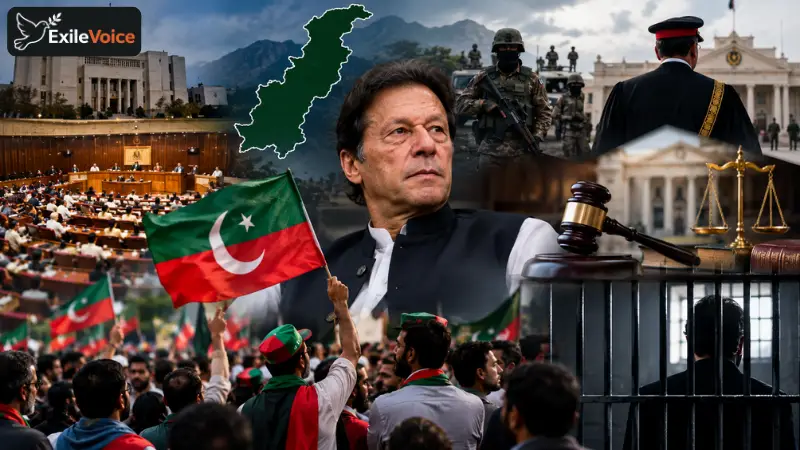
This dynamic of pressure is echoed in the events surrounding Adiala Jail, where the detention of former Prime Minister Imran Khan remains a focal point of public discourse. Despite calls for large-scale protests, the turnout at the jail site has been inconsistent, leading to internal debates about coordination, commitment, and the efficacy of political leadership within the opposition. The frustration felt by party members over the lack of communication highlights the broader disconnect between leadership strategies and grassroots mobilization.
Furthermore, the military's role in diplomatic mediation, specifically regarding Iran and the United States, has drawn scrutiny. While official narratives emphasize the pursuit of regional stability and the necessity of third-party mediation, critics argue that these actions often overlap with functions traditionally reserved for the Foreign Office. This blurring of lines between the security apparatus and civilian governance institutions remains a core issue in the ongoing debate about the restoration of democratic norms.
In Gilgit-Baltistan, the political landscape is witnessing a restructuring as independent candidates join the Istehkam-e-Pakistan Party (IPP). This realignment is interpreted by many as an attempt by the establishment to counter the influence of major political parties and assert more direct control over regional governance. The strategy appears to be a multi-faceted approach aimed at managing political outcomes in a manner that suits current institutional objectives, thereby creating an environment where traditional political alliances are increasingly fragmented.
As the government grapples with economic hardships, including inflation and budgetary pressures, the reliance on military-led solutions for domestic crises, such as protests in Azad Kashmir, has deepened public resentment. The labeling of protestors as "planted" or influenced by foreign agendas has failed to dampen the movement, suggesting that the underlying causes of economic despair are not being adequately addressed. Consequently, the struggle for political space in Pakistan remains deeply contested, with institutional dynamics playing a decisive role in shaping the country's trajectory.