The recent political developments in the United Kingdom provide a stark case study on the nature of internal party accountability. The emergence of Andy Burnham, a prominent Labour politician who recently won a decisive parliamentary election, has sparked a movement within the Labour Party to challenge Prime Minister Keir Starmer. The narrative here is not merely about electoral victory, but about the willingness of a political party to address the perceived failures of its leader.
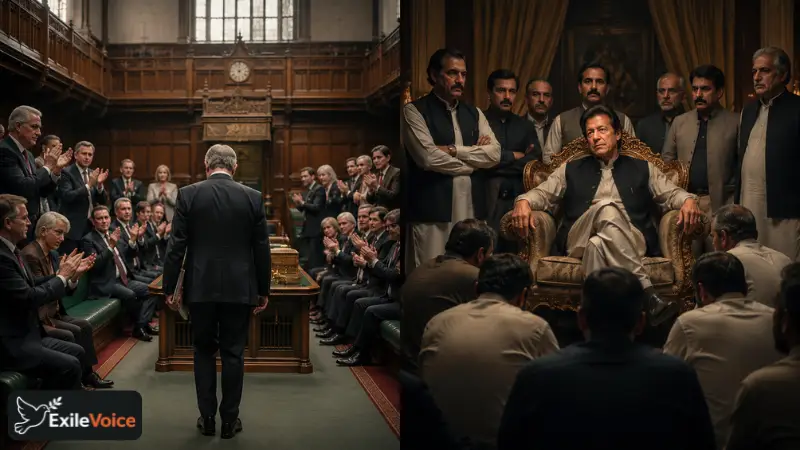
Historically, the UK political system has demonstrated a remarkable, if ruthless, mechanism for self-correction. Over the past 80 years, nine British Prime Ministers have been removed by their own parties, including figures like Margaret Thatcher, Tony Blair, Theresa May, Boris Johnson, and Liz Truss. This dynamic reflects a standard where the interests of the party and the country are held above the personal position of the leader. When a leader is seen as unpopular or detrimental to the party's future, they are, in effect, shown the door.
In stark contrast, the political culture in Pakistan presents an almost insurmountable barrier to such accountability. Within the major political entities of Pakistan, whether the Pakistan Tehreek-e-Insaf (PTI), the Pakistan Muslim League-Nawaz (PML-N), or the Pakistan Peoples Party (PPP), the concept of an internal party revolt leading to the removal of an established leader is virtually non-existent. Loyalty is often tied to individual figures rather than institutional or ideological benchmarks.
This divergence raises critical questions about political maturity and the health of democratic institutions. While British parties treat leadership as a temporary mandate subject to performance, Pakistani political leadership is often treated as an immutable status. This resistance to internal critique and leadership renewal in Pakistan hampers the ability of these parties to evolve in response to changing public sentiments or governance failures. The contrast serves as a sobering reminder of how institutional strength is predicated on the ability to place governance above individual personality.