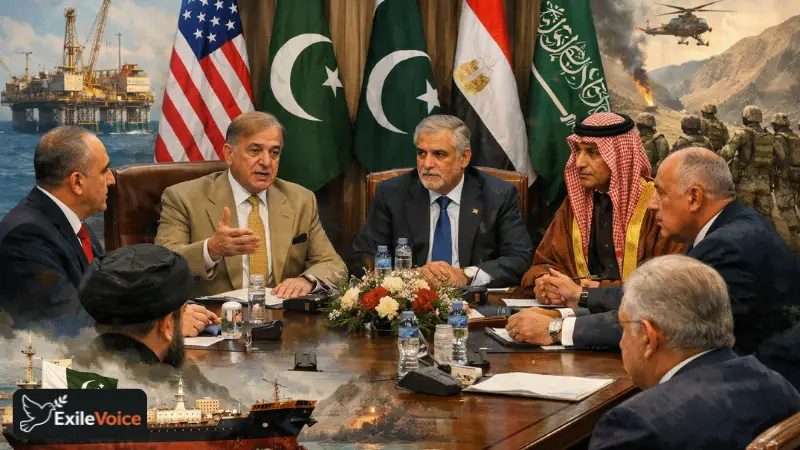
As the regional conflict involving Iran and the United States crosses the one-month mark, Pakistan finds itself in a familiar yet increasingly precarious position. The current administration in Islamabad, led by Foreign Minister Ishaq Dar and Prime Minister Shehbaz Sharif, has been vocal about its role as a mediator. Recent high-level meetings involving the foreign ministers of Turkey, Saudi Arabia, and Egypt in Islamabad have been framed by the government as a masterclass in diplomacy. However, a deeper analysis reveals a complex landscape of "jugaad" (makeshift solutions) and high-stakes maneuvering that may benefit the ruling elite more than the common citizen.
The central achievement touted by Islamabad is its ability to facilitate communication between two arch-rivals: Washington and Tehran. Despite having no formal diplomatic relations for over 45 years, the Iranian interests section in the United States operates out of the Pakistani embassy in Washington. This historical link has placed Pakistan at the heart of recent de-escalation efforts. Foreign Minister Ishaq Dar recently claimed that both the U.S. and Iran are satisfied with Pakistan’s role as a dialogue facilitator. Yet, this diplomatic "win" comes against a backdrop of severe domestic economic strain, including rising fuel prices and a security situation on the Afghan border that remains volatile.
The "oil facilitation" arrangement is perhaps the most tangible outcome of the last 30 days. Reports suggest that Iranian oil tankers are being allowed passage under the Pakistani flag, a move that Donald Trump has acknowledged. While some Indian analysts dismiss this as typical Pakistani "jugaad," others see it as a critical contribution to the global economy, ensuring the flow of energy during a time of war. However, this raises questions about Pakistan's long-term alignment. The Financial Times has reported growing unease within the Pakistani establishment regarding defense agreements with Saudi Arabia. If Riyadh invokes its defense pact and demands Pakistani military support against Iran, Islamabad could find itself trapped between a regional ally and a neighboring power.
Ultimately, while the Sharif administration celebrates retweets from Donald Trump and diplomatic photo-ops, the question remains: what has the average Pakistani gained? The image of the country on the international stage has undoubtedly been elevated, but the domestic costs, economic instability and border tension, continue to mount. Pakistan’s role as a bridge is a historic necessity, but as the conflict expands, the tightrope it walks becomes thinner by the day.