

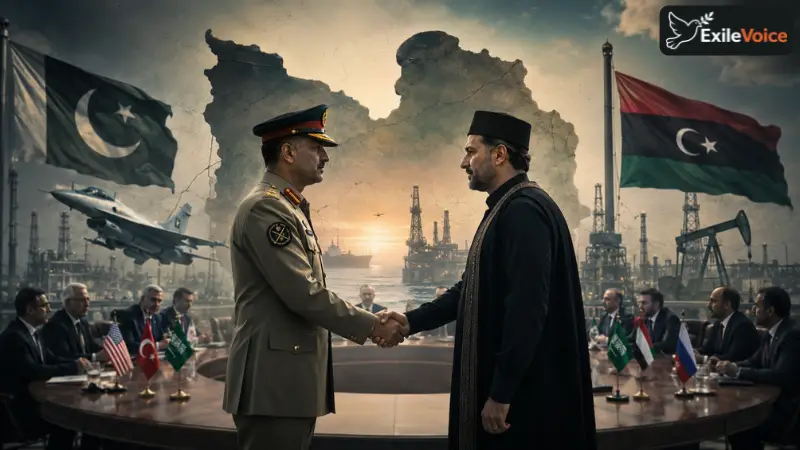
In the evolving landscape of international diplomacy, Pakistan’s establishment appears to be leveraging its position to navigate complex foreign conflicts. Recent reports indicate that following its mediation between Iran and the United States, Islamabad is now positioning itself as a central player in the long-standing Libyan civil war.
The conflict in Libya, which has persisted since the 2011 collapse of the Muammar Gaddafi regime, involves a complex web of international actors, including the United States, Turkey, Saudi Arabia, the UAE, and Russia. Pakistan’s strategic interest in this theater is multidimensional. Reports suggest that the Pakistani establishment, particularly through high-level engagements by Army Chief General Asim Munir, is actively working to facilitate a reunification process for Libya. This involves connecting with influential Libyan factions, including the Haftar family, specifically the Libyan National Army (LNA), which maintains control over significant oil-rich territories.
The motivation behind this "long game" is multifaceted. For the international community, particularly the United States, stabilizing Libya is a priority to ensure consistent energy security. As geopolitical tensions impact global trade routes, the prospect of unifying Libya could provide a stable environment for oil production and revenue.
For Pakistan, this diplomatic maneuvering serves a deeper strategic purpose. By positioning itself as a key mediator, Islamabad seeks to bolster its international legitimacy and economic interests. Reports of significant defense deals, such as the sale of JF-17 Thunder aircraft, highlight the dual nature of Pakistan’s foreign policy: blending diplomatic mediation with military industrial exports. This strategy is not entirely new; it mirrors historical partnerships, such as the close ties between Zulfikar Ali Bhutto and Muammar Gaddafi in the 1970s, which were critical during Pakistan’s nuclear program development and regional geopolitical challenges.
However, this strategy is not without significant risk. The Libyan political landscape remains deeply fractured, and Pakistan’s engagement with various factions necessitates balancing competing regional interests. Furthermore, international scrutiny remains high. As noted by influential voices in Washington, the global community remains cautious regarding Pakistan’s past associations and its stance on internal governance issues, including human rights and international sanctions compliance.
As Pakistan navigates this complex path, the effectiveness of its "long game" will depend on its ability to sustain international trust while balancing its domestic challenges with its ambitious foreign policy goals. The convergence of energy interests, military diplomacy, and historical legacies will determine whether this pivot brings stability to Libya or further complicates Pakistan’s standing on the global stage.

