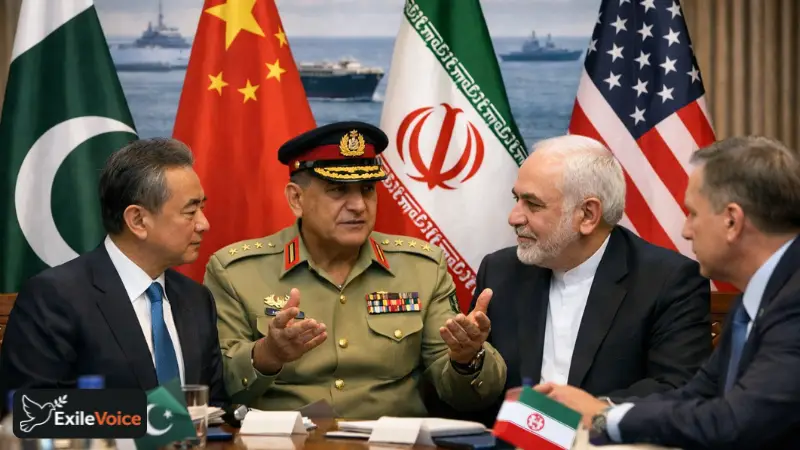
In a world increasingly defined by shifting alliances and volatile regional dynamics, Pakistan appears to be making a sophisticated diplomatic play that could redefine its standing on the global stage. Recent reports suggest that the Pakistani military leadership is moving beyond traditional security concerns to act as a high-stakes mediator between Tehran and Washington. The centerpiece of this strategy is not merely a bilateral effort but a "Big Smart Move": integrating China into a formal peace framework to stabilize the Middle East.
For decades, Pakistan has walked a tightrope between its strategic partnership with the United States and its neighborly, albeit complex, relationship with Iran. However, the current escalation involving Israeli strikes on Iranian infrastructure and retaliatory Iranian actions in the Gulf has pushed the region to a breaking point. The realization within Islamabad, and specifically within the General Headquarters (GHQ), is that Pakistan alone lacks the economic and political "heaviness" to guarantee a peace deal. By inviting Beijing to the table, Pakistan is leveraging China’s immense economic influence and its unique "trust equity" with both Tehran and Islamabad to create a more robust multilateral framework.
The timing of this initiative is critical. Pakistani Foreign Minister Ishaq Dar is scheduled for an urgent visit to China, reportedly at the invitation of Foreign Minister Wang Yi. While official communiqués focus on "regional issues," the subtext is clear: Pakistan is seeking to brief China on the quadrilateral talks held in Islamabad with representatives from Saudi Arabia, Turkey, and Egypt. The objective is to align Beijing with a ceasefire roadmap that includes the reopening of the Strait of Hormuz and a cessation of hostilities.
This move represents a departure from Pakistan’s previous reactive foreign policy. By positioning itself as the bridge that brings a global superpower into a regional firestorm, the Pakistani military aims to elevate its stature from a regional security actor to a global diplomatic facilitator. If successful, this framework would provide the necessary guarantees that Iran seeks, specifically, protection against future "imposed" wars, while offering the Trump administration a face-saving exit strategy that does not look like a retreat.
However, the path forward is fraught with obstacles. Pakistan must convince the Saudi leadership that a protracted war serves no one's interest, even as Riyadh remains wary of Iranian influence. Simultaneously, they must reassure an Iranian leadership that feels deeply victimized by recent structural losses. The inclusion of China provides the "solid guarantee" that Western promises often lack in the eyes of Tehran.