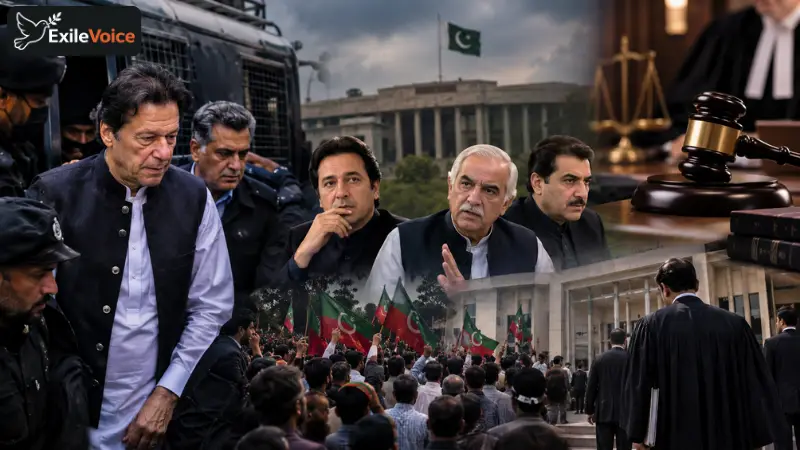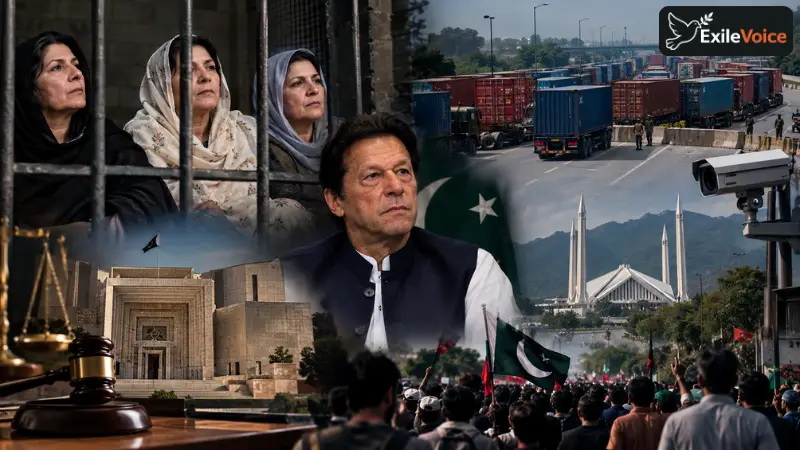
The ongoing political turbulence in Pakistan has reached a crucial juncture as legal disputes, administrative crackdowns, and escalating protests converge into a high-stakes constitutional confrontation. Central to the latest surge in tensions is the reported hunger strike initiated by the sisters of former Prime Minister Imran Khan inside Lahore's Kot Lakhpat Jail. Reports indicate that Aleema Khan, Uzma Khan, and Noreen Niazi commenced their protest following detention under Section 3 of the Maintenance of Public Order (3 MPO) ordinance. The detention orders, issued by the district administration on grounds of potential public order disruptions in Lahore, followed raids on their residences. Although petitions challenging these detentions were presented before the Lahore High Court, the court issued notices to the state rather than granting immediate injunctive relief, effectively leaving the one-month detention intact.
Simultaneously, the federal and provincial administrative machinery is undergoing severe structural pressure due to planned political marches directed toward Islamabad. To counter potential blockades and control public movement, federal authorities have imposed extreme logistical measures. Reports highlight that over 1,550 freight containers have been deployed at key arterial access points, including the Attock Bridge and major entry corridors connecting Khyber Pakhtunkhwa to Punjab and the Federal Capital Territory. The daily financial burden of retaining these containers is estimated at over 46.5 million PKR for the capital territory alone, creating significant economic strain alongside widespread disruption to trade networks and everyday commuters.
To further institutionalize state control over public demonstrations, a new presidential ordinance was enacted for the Islamabad Capital Territory. The ordinance establishes severe legal and financial penalties for interference with municipal infrastructure, specifically targeting surveillance assets under the Safe City initiative. Under these provisions, any individual or event organizer accused of damaging public camera networks faces fines starting at 2 million PKR per unit, alongside rapid prosecution timelines in sessions courts and potential property seizures for non-payment. Critics view the law as an attempt to financially deter opposition organizers from conducting large-scale rallies, whereas official state representatives frame it as a necessary measure to protect critical municipal security infrastructure.
The judicial handling of executive detentions has drawn increased scrutiny from civil society observers and legal scholars. High Court proceedings regarding police raids, domestic forced entries, and blanket MPO detentions reflect a widening gap between administrative security directives and constitutional fundamental rights guarantees. While high-ranking judicial officials continue to emphasize structural reform and judicial integrity, the deferral of immediate judicial relief in high-profile political detentions highlights the systemic vulnerabilities within Pakistan's institutional landscape. As political parties organize further resistance actions, the combination of hunger strikes, massive expenditure on security blockades, and aggressive ordinance legislation signals a prolonged period of political volatility.