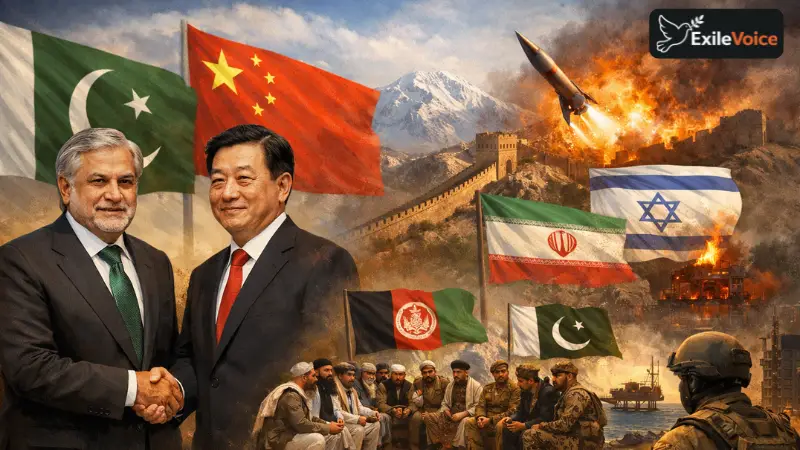
The recent visit of Ishaq Dar to China marks a critical juncture in Pakistan's foreign policy, particularly as the region grapples with escalating tensions between Iran and Israel. China’s role as a mediator has become increasingly central, following Iran's explicit request for Chinese involvement in negotiations involving Pakistan. The Iranian leadership expressed reservations regarding Pakistan’s alignment with Western interests, specifically citing concerns over the Board of Peace and historical ties with U.S. administration policies. Consequently, China has stepped in, not just as a facilitator, but as a regional supervisor demanding a rigorous "homework" assignment from Islamabad before deeper strategic cooperation can proceed.
A primary condition set by Beijing was the stabilization of the Pakistan-Afghanistan border. Prior to the diplomatic mission's arrival in China, a Pak-Afghan jirga was convened to address cross-border terrorism and ensure that neither soil is used for hostile activities against the other. This shift is notable given the previous stance of Pakistan’s military leadership, which had signaled a lack of urgency regarding a ceasefire with the Afghan Taliban. The Chinese pressure has effectively forced a pivot toward de-escalation, resulting in a joint declaration of mutual cooperation and non-aggression.
In the broader context of the Middle East, China has outlined a five-point peace plan to Pakistan. This framework emphasizes an immediate ceasefire between Israel, the U.S., and Iran, the protection of non-military targets, and the prioritization of the UN Charter. A significant motivator for China is the security of energy corridors; China relies on Iran for approximately 15% of its oil needs and is deeply invested in the stability of the Strait of Hormuz. By distancing itself from the 15-point U.S.-led agenda previously carried by Pakistani intermediaries, China has asserted its independent diplomatic path, focusing on regional stability and the protection of civilian infrastructure.