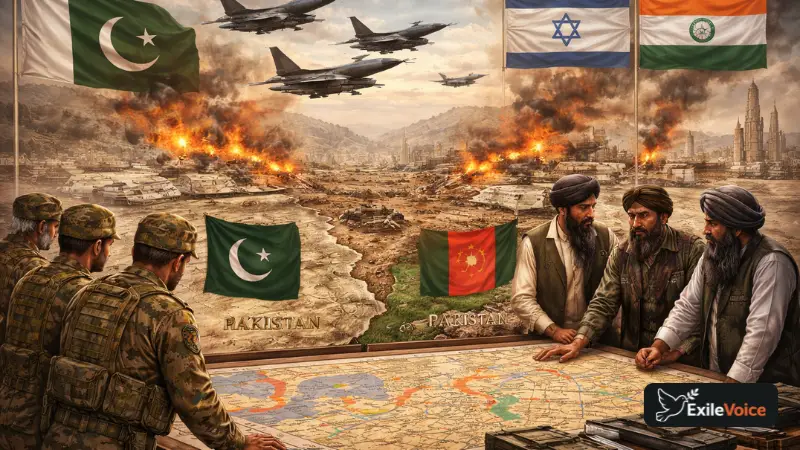
On March 17, 2026, a significant escalation occurred in the region as the Pakistan Air Force (PAF) conducted deadly strikes within Afghanistan. Reports from the Afghan Ministry of Health and international non-governmental organizations suggest that the strikes hit a medical facility, specifically a hospital dedicated to the treatment of addiction. While initial death tolls were cited at 200, international observers indicate the final number could reach 400.
The official Pakistani narrative, delivered via government spokespersons, maintains that the operation exclusively targeted military assets. These include ammunition depots and training centers used by militants, specifically the Tehrik-i-Taliban Pakistan (TTP), to launch cross-border attacks. However, geopolitical analysts observe a striking resemblance between these justifications and what is termed the "Israeli Playbook." This refers to a military strategy where strikes on civilian infrastructure or medical facilities are justified by claiming they serve as "human shields" or conceal underground militant operations.
This shift marks a total collapse of the "Strategic Depth" policy that Pakistan maintained for decades. For years, the Pakistani establishment envisioned a friendly Taliban-led government in Kabul that would eliminate Indian influence and provide a secure western border. Instead, the relationship has devolved into open warfare. The current strategy appears focused on destabilizing the Afghan regime, possibly to incite internal chaos or regime change.
The humanitarian and democratic implications are severe. By transforming the border regions of Khyber Pakhtunkhwa and Balochistan into active war zones, the prospect of stable democratic governance in Pakistan diminishes. Historically, prolonged regional conflict serves to consolidate military authority, often at the expense of civil liberties and electoral integrity. As Pakistan adopts this aggressive posture, it risks creating a permanent "Darul Harb" (Abode of War) that could invite further intervention from regional powers like India, leading to long-term fragmentation