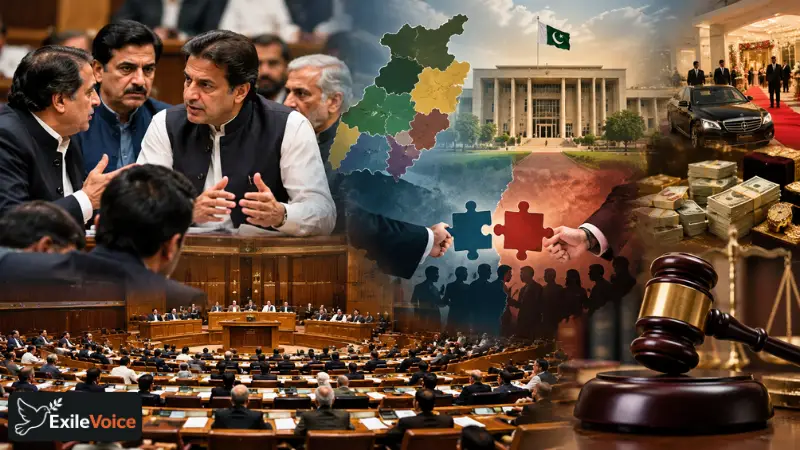
The political climate in Pakistan remains intensely volatile, dominated by the ongoing legal and physical status of former Prime Minister Imran Khan. The recent discourse, as analyzed in recent media reports, highlights a persistent tension between the Pakistan Tehreek-e-Insaf (PTI) leadership and the current government, alongside a complex relationship with the military establishment.
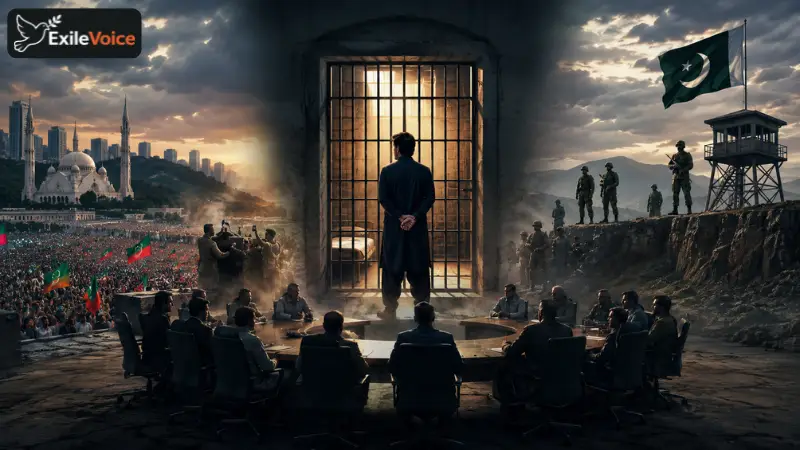
At the heart of the current debate is the question of Imran Khan’s health and the conditions of his detention. Speculation regarding his well-being has fueled significant unrest among his supporters, leading to intense scrutiny of the government’s handling of his incarceration. The political narrative has shifted from mere policy opposition to a more critical examination of state responsibility for the leader’s safety. Observers note that the ambiguity surrounding these conditions creates a power vacuum, where various stakeholders attempt to influence public perception and policy directions.
Furthermore, the relationship between PTI and the incumbent government, often characterized by sharp, adversarial rhetoric, appears to be undergoing a strange, if tentative, recalibration. Some political analysts observe "back-channel" discussions or subtle shifts in rhetoric, possibly driven by the realization that continued polarization serves few interests in a struggling economy. Yet, the core conflict remains: the tension between civilian political aspirations and the influence of the institutional "establishment" (often referred to as the "Asim vs. Imran" dynamic). As the country navigates this, the central challenge remains the preservation of institutional credibility and the need for a sustainable path forward that avoids prolonged civil instability.