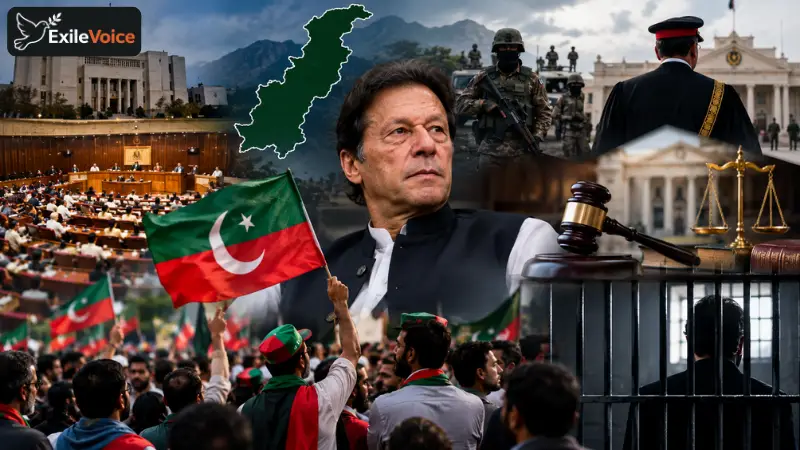
In the modern landscape of Pakistan, the concept of accountability is increasingly being tested by high-profile cases that raise questions about the rule of law and the treatment of different societal segments. Recent events surrounding prominent political families and administrative responses have sparked widespread public and media debate, suggesting a widening gap in how justice is applied depending on one’s status.
The situation involving relatives of political figures in alleged criminal activities has brought the efficiency and transparency of the local police and investigation agencies to the forefront. When public narratives shift, often labeling suspects as "victims" rather than perpetrators, it creates a profound challenge for judicial credibility. Professional observers note that when the handling of high-profile cases involves contradictory reporting and delayed forensic analysis, public trust in law enforcement diminishes.
For instance, critics have highlighted discrepancies in how forensic evidence is collected and analyzed in cases of alleged violence. The delay in involving forensic experts at crime scenes is often interpreted as an attempt to dilute the severity of the charges or to provide a pathway for suspects to evade accountability. This phenomenon reinforces a long-standing public perception that the legal system is bifurcated: one standard for the influential and another for the general public.
Furthermore, the media's role in disseminating information has become a critical battleground. The press has been active in questioning official narratives, specifically regarding the handling of investigations and the conduct of police officials. When professional journalists face friction for seeking transparency, such as being denied answers during briefings, it highlights the fragility of free information in the country. The recurring theme of "business-as-usual" despite public outcry suggests that reforms are needed to ensure that no individual or family is above the law.
The international perception of these events also has long-term implications. When internal legal processes are viewed as inconsistent or subservient to political influence, it impacts Pakistan's global image. The necessity for an impartial and robust justice system is paramount, as it serves as the foundation for both domestic stability and international standing.
Professionals monitoring these developments argue that the path forward requires an unwavering commitment to the rule of law, independent judicial review, and a transparent investigation process that is immune to external pressures. Without these elements, the goal of achieving a truly equitable society remains elusive, and the discourse will continue to center on the perceived impunity of the elite.