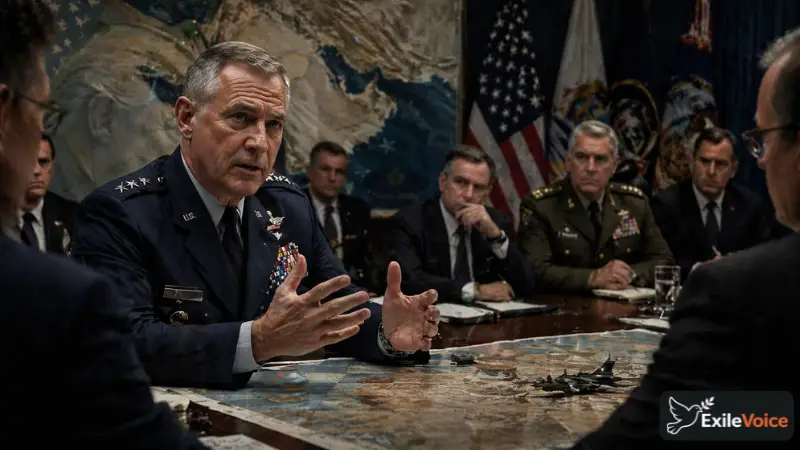
In a rare and significant public appearance at a university forum, General Dan Kaine, Chairman of the Joint Chiefs of Staff, offered a sobering perspective on the use of military force. While he did not explicitly mention the current tensions with Iran, his emphasis on "second and third-order consequences" of military action serves as a crucial window into the strategic thinking within the Pentagon. The critical question Kaine proposed is one that must precede every deployment of fire power: "And then what?"
This philosophical restraint highlights a growing friction within the American political and military system. In the United States, the President holds the executive authority to order strikes through the Secretary of Defense, but the Chairman of the Joint Chiefs serves as the "Advisor-in-Chief," tasked with presenting the grim realities of escalation. Reports have recently leaked suggesting that during heated moments, Trump discussed nuclear codes and rapid military responses, only to be cautioned by senior military planners about the non-linear risks involved. The military machine is acutely aware that while it can destroy targets, it cannot easily control the political aftermath in a nation as determined as Iran.
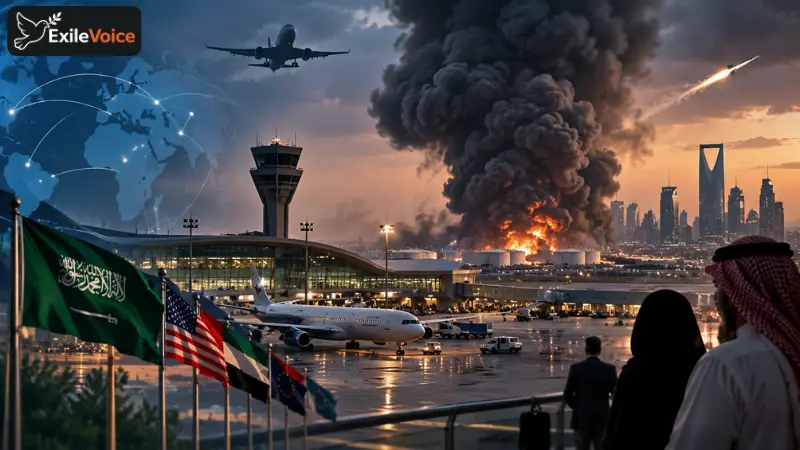
The reluctance to enter a full-scale conflict is not born of a lack of weaponry or capability, but a lack of "political space" and clear strategic objectives. Modern warfare against an entrenched and ideologically committed adversary like Iran presents an existential threat to regional stability. General Kaine’s academic discourse suggests that military leaders are looking for a "negotiated solution" rather than a totalizing war. They recognize that Iran’s leadership, though often labeled as radical, has played its cards with a startling level of rationality, achieving political results without necessarily seeking the total destruction of the enemy. As long as the "consequences of force" remain unpredictable and potentially catastrophic for global energy markets and regional allies, the internal military consensus favors skirmishes and selective strikes over an all-out invasion.