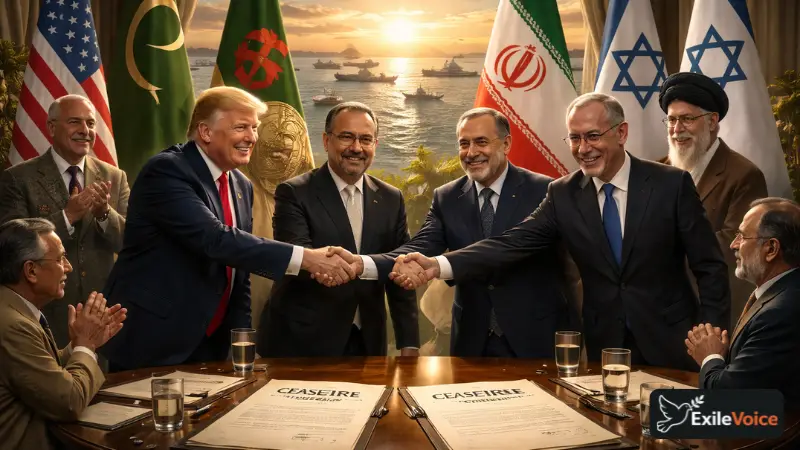
In a monumental shift for global geopolitics, an official ceasefire has been established between Iran, Israel, and the United States, signaling a potential end to one of the most volatile periods in recent Middle Eastern history. The agreement, initially set for a 15-day duration, aims to halt direct military engagements and provide a window for high-level diplomacy. This truce comes at a critical juncture where the threat of regional escalation had reached an unprecedented peak, impacting global oil markets and humanitarian stability across several nations.
The terms of the ceasefire are comprehensive. Under this agreement, Israel and the United States have committed to suspending all strikes against Iranian territory. Reciprocally, Israel will cease its military operations in Lebanon, specifically targeting Hezbollah strongholds, which had seen intense bombardment in the preceding weeks. Iran has also pledged to halt its retaliatory missile and drone strikes against Israel, as well as its neighboring Middle Eastern countries, including the United Arab Emirates, Bahrain, and Kuwait. These cross-border strikes had previously threatened to destabilize the entire Gulf region, dragging neutral parties into a broader conflict.
A pivotal element of this breakthrough is the partial reopening of the Strait of Hormuz. While the United States and Pakistan claim a "full and immediate" reopening, the ground reality reflects a more nuanced arrangement. Iran has agreed to allow safe passage for vessels but has introduced a "coordination" requirement. This subtle shift effectively grants Iran a level of territorial control over the strait that did not exist pre-conflict. Strategically, this allows Iran to monitor and potentially regulate maritime traffic, a move that analysts suggest could lead to the implementation of "transit fees" or "tolls," potentially generating billions in revenue for Tehran.
The diplomatic maneuvers leading to this announcement were notably complex. While world leaders like President Donald Trump and the Iranian leadership issued formal statements, the role of Pakistan as a mediator has come under intense scrutiny. The announcement process was marked by a significant blunder when the Pakistani Prime Minister's office accidentally shared a post containing a "draft" label, suggesting the message had been pre-written or coordinated by external entities, likely the U.S. administration. Despite this transparency mishap, the result remains the same: a cooling of hostilities that has already begun to stabilize international oil prices.
Furthermore, the ceasefire is built upon a "10-point proposal" submitted by Iran, which President Trump described as a "viable basis for negotiations." These points include commitments against future aggression, the recognition of Iranian uranium enrichment for civilian purposes, and the gradual lifting of long-standing economic sanctions. As the parties prepare for formal talks in Islamabad, the world watches to see if this 15-day pause can be transformed into a lasting peace treaty. The stakes are incredibly high, as the resolution of the "Strait of Hormuz" crisis and the cessation of regional proxy wars could redefine global energy security for the next decade.