

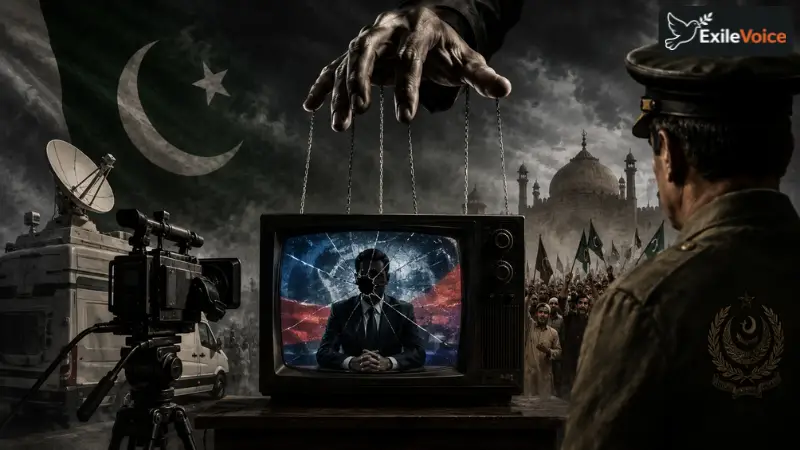
The landscape of Pakistani media is currently witnessing a significant shift in power dynamics, underscored by a high-profile controversy involving Geo TV and the country's intelligence establishment, the ISI. This situation has ignited a debate over the role of media houses in political narratives and the extent of institutional influence over news organizations.
The controversy originated from a broadcast by Geo TV during the month of Muharram, which featured content deemed offensive by a significant portion of the Pakistani public. The reaction was swift and intense, with religious scholars and citizens expressing outrage over what they perceived as a violation of religious sentiments. Initially, Geo TV distanced itself from the controversy, asserting its editorial independence. However, as public backlash intensified, the media house opted for an unconditional apology and accepted a suspension imposed by the Pakistan Electronic Media Regulatory Authority (PEMRA).
Industry observers note that this incident is not isolated but part of a broader struggle for narrative control. There are persistent allegations that intelligence agencies have been actively managing media content, sometimes using controversial methods to silence dissent or manipulate public discourse. The sudden re-emergence of the Tehreek-e-Labbaik Pakistan (TLP) at protests against Geo TV, following a period of relative dormancy, has led many to speculate that these actions are being orchestrated to serve specific political objectives.
While Geo TV has faced criticism for its alleged role in character assassination campaigns against political opponents, the consensus among many analysts is that the current crisis is being leveraged to exert pressure on the media house to align more closely with certain institutional interests. The situation highlights the precarious state of independent journalism in Pakistan, where media organizations are caught between public accountability, institutional directives, and their own political affiliations.
Ultimately, the controversy serves as a stark reminder of the fragile balance of power in Pakistan. As the country navigates these turbulent waters, the question remains whether the media can achieve a level of autonomy that transcends political pressures and institutional surveillance. The resolution of this specific dispute may provide a blueprint for how future conflicts between the media and the state will be managed.

