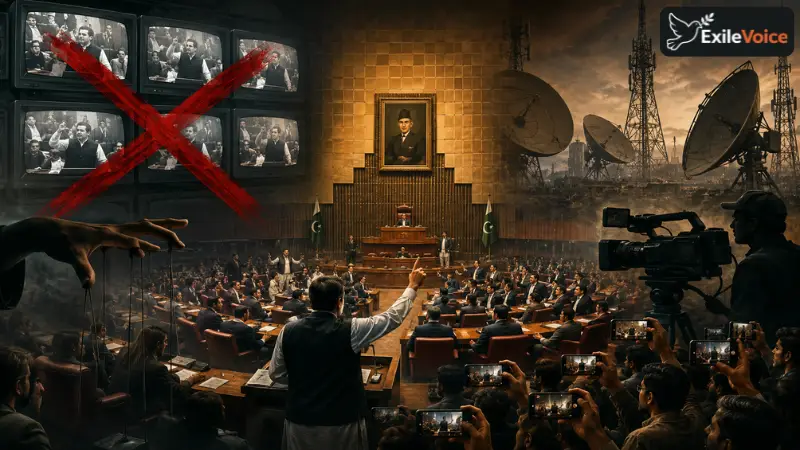
The dynamics of political discourse within the Pakistani National Assembly are undergoing a period of intense scrutiny as opposition leaders push back against the systematic blocking of their speeches from national broadcast. This struggle highlights a long-standing pattern where established media channels, often aligned with institutional agendas, restrict or black out critical voices, leaving politicians with limited avenues to reach the public.
Historical context reveals that during previous administrations, media houses were frequently used to amplify state narratives while sidelining opposition viewpoints. The typical format of political talk shows, which often pitted one opposition representative against multiple state-aligned guests and an antagonistic anchor, created an environment where substantive dialogue was nearly impossible. This strategy of "four versus one" ensured that the official government narrative dominated the airwaves, effectively silencing dissenting voices.
In the current National Assembly, leaders from the opposition, including figures like Ali Muhammad Khan and Gohar Khan, have urged the Speaker to end the practice of censoring parliamentary proceedings. However, the situation remains complicated. Some opposition figures have attempted to appease the establishment by calling for self-censorship regarding the military and judiciary, yet this approach has been met with skepticism. There is an ongoing debate about whether criticizing specific individuals within these institutions constitutes an attack on the institutions themselves, a premise often used to justify further censorship.
As access to traditional media remains restricted, politicians are increasingly turning to digital platforms and personal recording devices to disseminate their messages directly to the public. Despite the efforts to control the narrative, the shift toward social media is slowly breaking the long-held monopoly of conventional television channels. The core issue, however, remains the lack of institutional commitment to true transparency within the legislative process, as both sides of the aisle continue to navigate a complex landscape of political maneuvering and media management.