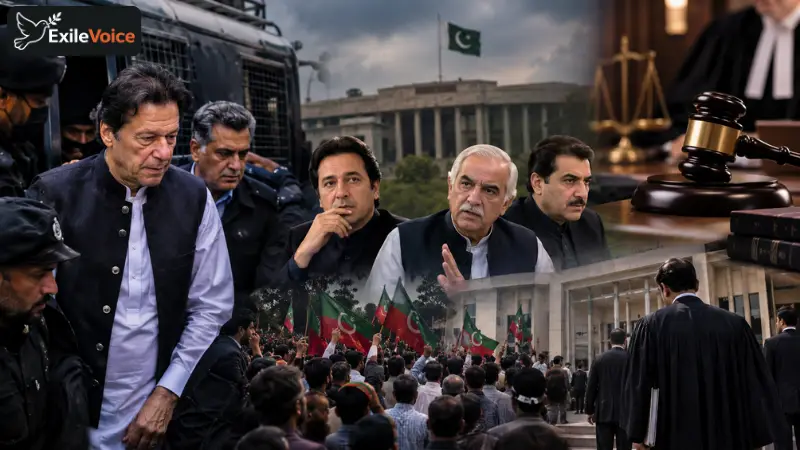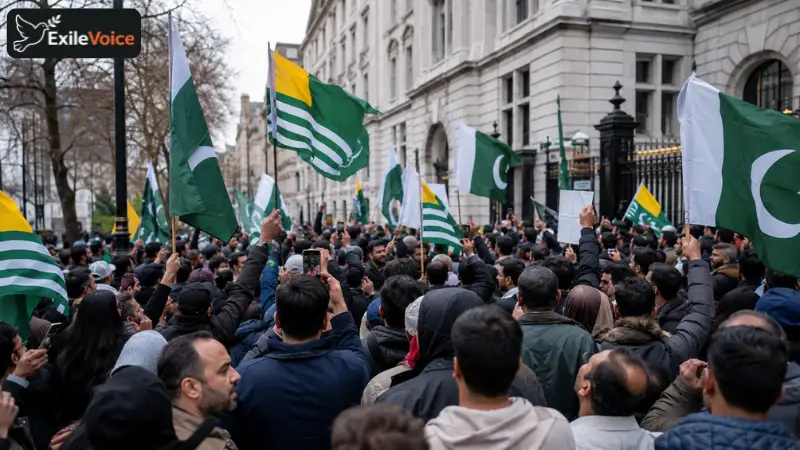
The political landscape surrounding Pakistan’s military establishment experienced a seismic shift following massive protests outside the Pakistani embassy in London. Historically known as a hub for anti-India demonstrations by Kashmiri and Pakistani diaspora communities, the momentum in London radically transformed. Protesters redirected their anger toward the military leadership in Islamabad, denouncing alleged state-sponsored oppression, extrajudicial actions, and the ongoing targeting of political dissidents, including supporters of Pakistan Tehreek-e-Insaf (PTI).
What set these demonstrations apart was the broad solidarity demonstrated by the Kashmiri diaspora. Rather than focusing solely on regional grievances, protesters raised slogans highlighting human rights violations across Balochistan, Khyber Pakhtunkhwa, and the imprisonment of former Prime Minister Imran Khan. This unification under a shared banner of anti-authoritarianism signals a growing disillusionment among international diaspora communities regarding the civil-military imbalance in Pakistan.
The demonstrations also brought direct friction to prominent media figures aligned with the political establishment. Murtaza Ali Shah, a journalist associated with Geo TV, was confronted by angry protesters outside the embassy. Demonstrators accused legacy media outlets of whitewashing state suppression and downplaying civilian casualties in Azad Kashmir. The tense confrontation underscores a deep public distrust toward mainstream media narratives, mirroring similar backlashes witnessed internationally against partisan reporting. Observers note that these events reflect a dangerous erosion of credibility for state-backed media networks as overseas communities become increasingly vocal against military oversight.