

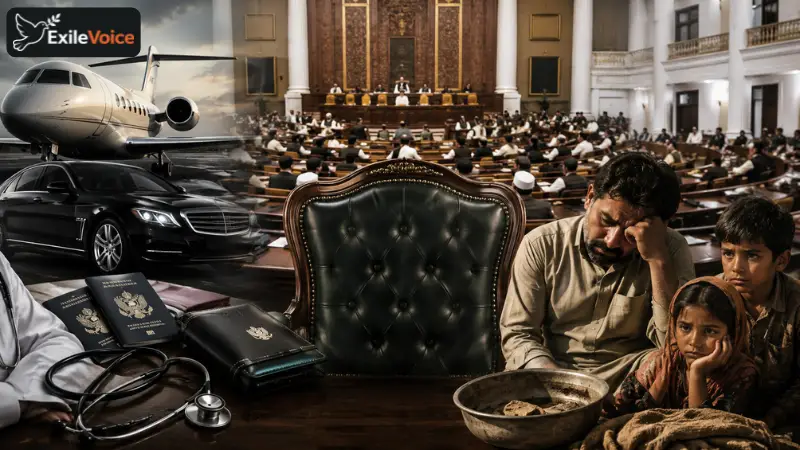
A significant controversy has erupted within the Khyber Pakhtunkhwa (KP) Assembly following the passage of a bill that grants extensive perks and privileges to members of the provincial assembly (MPAs). The legislation, which has sparked intense public debate, includes provisions for lifelong blue passports for MPAs and their spouses, free air and ground travel, and comprehensive medical allowances, among other benefits.
Critics, including political analysts and opposition voices, argue that this legislation contradicts the core ideology and manifesto of the Pakistan Tehreek-e-Insaf (PTI), the party that holds a significant mandate in the province. The move is seen by many as a blatant disregard for the economic hardships faced by the common citizen, especially when the provincial government is expected to focus on grassroots development and the core issues championed by Imran Khan.
The details of the bill, which were reportedly kept under wraps until recently, reveal a wide range of benefits. These include, but are not limited to, free utility allowances, specialized security protocols, and even provisions for official rest house usage. Furthermore, the legislation extends similar benefits to the Speaker and Deputy Speaker, including the use of state-provided aviation facilities for public interest.
The justification offered by some officials, that the bill was introduced by the opposition, has been met with skepticism. Critics point out that with a two-thirds majority, the ruling party bears the ultimate responsibility for the legislation it passes. The situation has led to accusations of a "disconnect" between the elected representatives and the public, with many labeling the move as insensitivity toward the economic realities of the populace.
As the political fallout continues, questions remain regarding the timing and necessity of these perks. While supporters may argue that such measures are required for the efficient functioning of lawmakers, the optics of prioritizing personal benefits over urgent provincial issues have severely damaged public perception. The incident serves as a stark reminder of the challenges in maintaining ideological integrity within governance structures.

