

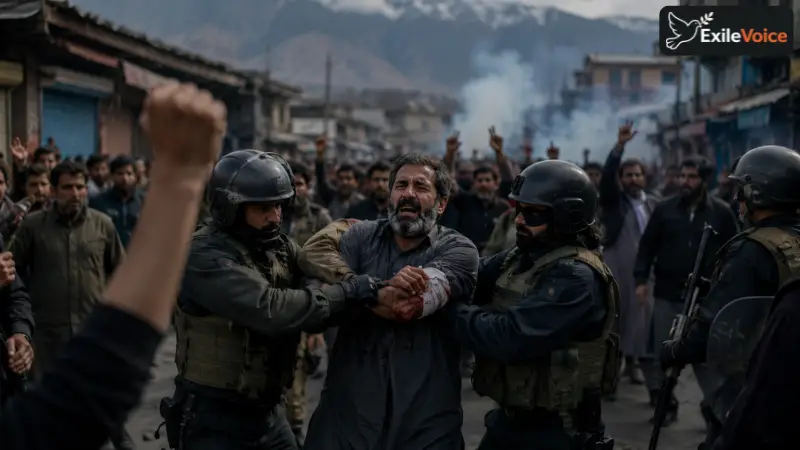
The political landscape in Kashmir has become increasingly volatile following the reported arrest of Shoukat Nawaz Mir, a key figure in the Joint Awami Action Committee. While official law enforcement sources have denied his detention, conflicting reports from committee members suggest a more disturbing reality. According to these accounts, not only was Mir arrested, but he also allegedly sustained a gunshot wound to his arm during the process.
This development follows a period of intense public dissatisfaction and rumors that had circulated previously, claiming Mir had fled to Indian-administered Kashmir to evade Pakistani authorities, a claim vehemently denied by his associates. The situation is further complicated by allegations that authorities had previously conducted raids on his residence, claiming to have discovered Indian currency and weaponry.
The Joint Awami Action Committee, led by figures like Sardar Umar Nazir Kashmiri, maintains that these actions constitute state-sponsored intimidation against a peaceful, rights-based movement. Protests have erupted in response to the news, signaling deep-seated public anger. The political dynamics are further strained by the involvement of established parties like the JUI-F and the PPP, whose recent alliances have drawn criticism from the local resistance leadership. For nearly a month, Kashmir has been under immense pressure, with commerce and daily life significantly disrupted by the ongoing tensions. The government’s continued aggressive response, exemplified by the reported incident involving Mir, suggests a strategy of doubling down rather than pursuing dialogue or de-escalation.

