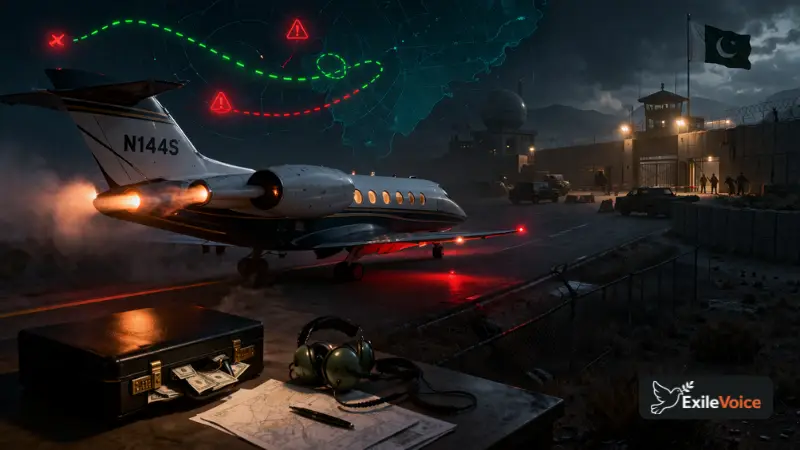
The aviation landscape in Pakistan has recently been thrust into the spotlight following serious allegations regarding the misuse of state-controlled or high-profile private aircraft. Investigative reports have emerged detailing a series of flights where standard operating procedures appear to have been systematically bypassed, raising questions about transparency, national security, and the potential for illicit activities.
One of the primary concerns centers on a specific aircraft, identified by the tail number N144S. Data gathered from international flight tracking databases like FlightRadar24 suggests a pattern of "hidden" flight paths. On multiple occasions, including dates in February and early March 2026, the aircraft reportedly departed from Lahore but failed to register a destination in public databases. While it is common for high-security flights to have certain restrictions, the methods used in these instances have drawn the ire of aviation professionals.
Industry insiders and pilots have pointed out a particularly unusual tactic: landing at sensitive airbases, such as the Pakistan Air Force (PAF) base in Rawalpindi, and keeping the engines running for several hours without shutting down. In the world of aviation, this is an highly unconventional and expensive practice. By not shutting off the engines, the aircraft’s automated transponders often do not register an "arrival" event in global tracking systems. This allows the passengers to conduct meetings, potentially within the aircraft itself or at nearby rest houses, and return to their origin without a digital footprint of their stopover ever being created for public or international scrutiny.
Furthermore, there are alarming reports that the aircraft’s navigation and tracking systems (transponders) have been intentionally disabled during flight. Such actions are typically reserved for intelligence operations by agencies like the CIA, ISI, or MI. When used for non-state-critical personal or political travel, it constitutes a serious international aviation violation. Disabling these trackers poses a significant safety risk, as it makes the aircraft "invisible" to other nearby planes, increasing the chance of mid-air collisions. It also hampers search and rescue efforts in the event of an emergency.
Speculation regarding the motive for such secrecy ranges from high-level political negotiations to more nefarious possibilities like money laundering. Critics argue that when public figures utilize resources funded by taxpayers, there must be a clear and transparent record of their movements. The involvement of foreign pilots, reportedly earning exorbitant monthly salaries of up to $38,000, adds another layer of scrutiny to the financial management of these operations. As these allegations gain traction, the demand for a formal inquiry into the tampering of flight records and the bypass of international aviation safety protocols continues to grow.