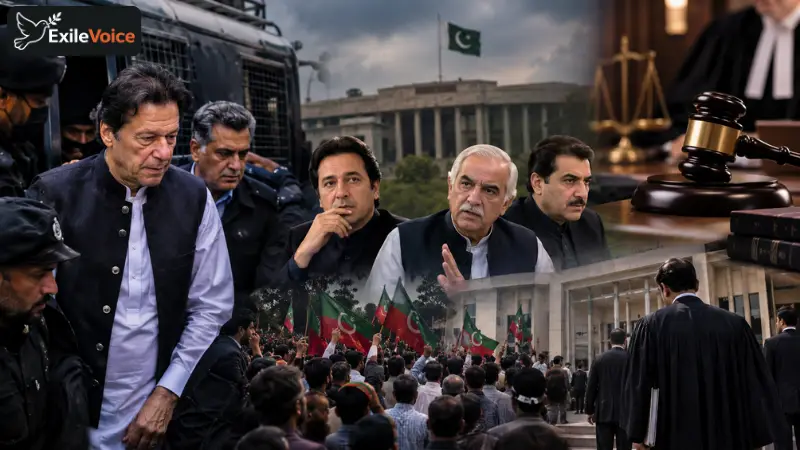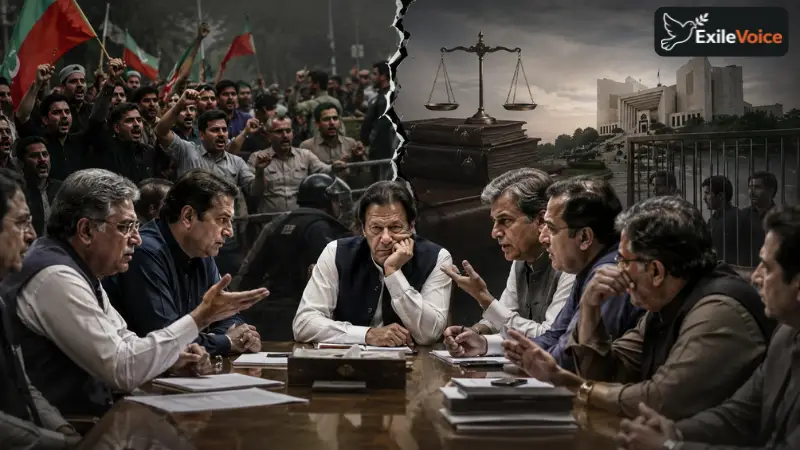
The internal stability of Pakistan's primary opposition alliance faces significant challenges as senior leadership figures openly clash over street agitation strategies and the timing of public demonstrations. Recent public statements from key leaders within Pakistan Tehreek-e-Insaf highlight a growing tactical divide regarding planned protest movements. Central leaders have explicitly distanced themselves from regional announcements of immediate public demonstrations, publicly reprimanding subordinate figures for issuing unauthorized protest schedules. This internal friction became undeniably apparent when senior spokespersons rejected a previously announced demonstration timeline, stating that no formal consultations had taken place among the core leadership committee.
This public dispute reveals a deeper, more complex structural challenge within the opposition apparatus, which currently operates under intense legal pressure and state scrutiny. The friction between national strategists and regional organizers highlights two conflicting approaches to dealing with the current political environment. Regional leaders, who face immediate pressure from their local voter bases, favor aggressive and continuous street mobilization to challenge the sitting government's legitimacy. Conversely, the central leadership committee prefers a highly cautious, legally focused approach. They choose to prioritize ongoing court battles, constitutional petitions, and international advocacy over unpredictable and risky street confrontations that could trigger further state crackdowns.
This strategic hesitation is further complicated by organizational disruptions within the party's secondary leadership ranks. With primary figures facing prolonged detentions and extensive legal battles, the responsibility for managing daily operations has fallen onto secondary committees and regional heads. This decentralized structure has led to conflicting public statements, uncoordinated policy announcements, and a visible lack of unified direction. Central committee members argue that premature or poorly planned protests play directly into the hands of state security agencies, allowing the government to execute mass arrests and disrupt the party's legal defense strategies without achieving any tangible political breakthroughs.
Concurrently, the ruling coalition continues to exploit these visible internal divisions to strengthen its own position. Government strategists utilize public disagreements within the opposition to paint the alliance as a disorganized, fracturing political force that lacks a cohesive national agenda. By focusing heavily on internal organizational disputes, the state effectively minimizes the impact of opposition grievances regarding election integrity, judicial independence, and economic mismanagement. As long as the opposition's central command remains trapped in a cycle of tactical disagreements and public corrections, its ability to launch a coordinated, cross-provincial movement capable of pressuring the current government remains severely limited.