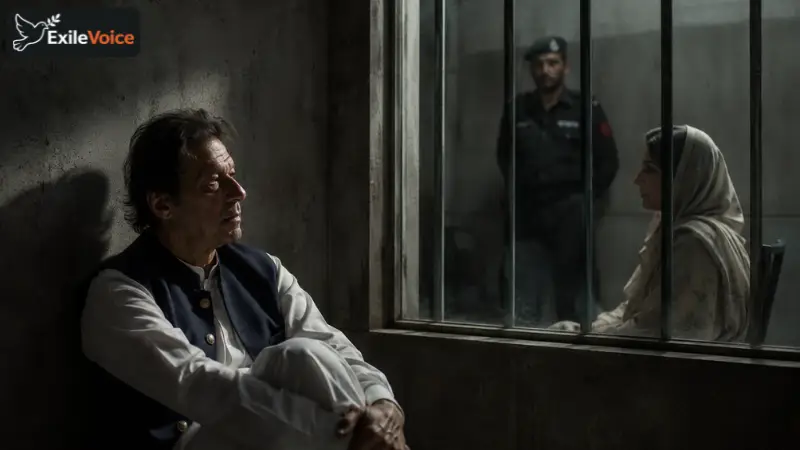
The ongoing situation surrounding former Prime Minister Imran Khan’s incarceration has become a focal point of intense political debate in Pakistan, centering on the ethics of his solitary confinement and the conditions under which family visitation is permitted. Recent discourse, prominently featuring Aleema Khan, has raised critical questions about the intent behind allowing specific family members, such as Noreen Khan Niazi, access to the imprisoned leader.
The core argument against allowing restricted, singular access is the fear that such a meeting would establish a "new normal," effectively legitimizing the state's decision to bypass court orders that mandate broader access for family, legal counsel, and party associates. Critics argue that authorities might use a singular, controlled meeting as a pretext to justify extended periods of future isolation, arguing that "contact has been granted," thereby undermining the legal rights of the detainee.
Conversely, a counter-perspective exists within the political landscape, suggesting that any opportunity for contact should be utilized. This view posits that given the lack of independent information regarding Khan’s health, specifically regarding his ocular issues, and the urgency of conveying directives to the public amidst critical economic and political developments like provincial budgeting, restricted access is better than none.
This dilemma highlights a broader systemic failure in the rule of law. The reliance on the judicial system for relief has yielded little progress, leaving the political party to navigate an environment where traditional legal and political avenues are systematically obstructed. The refusal to grant comprehensive visitation rights, coupled with the apparent prioritization of political narrative control over humanitarian considerations, underscores the challenging reality of political detention in the current climate.