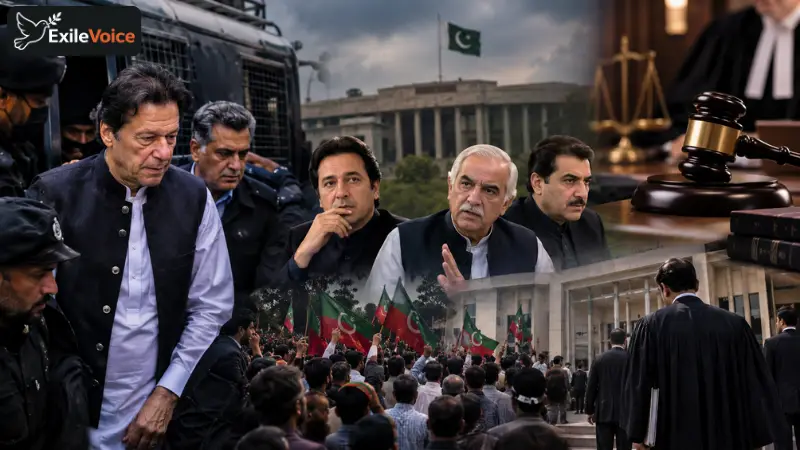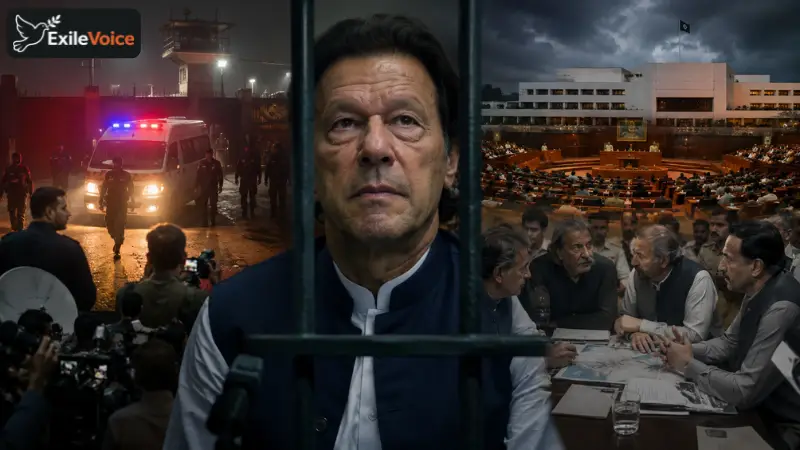
On June 12, a wave of intense media speculation took over Pakistan's political landscape following late-night breaking news reports by ARY News claiming that former Prime Minister Imran Khan had been moved under tight security from Adiala Jail to a hospital. This news instantly sparked widespread panic and confusion among workers and leaders of the Pakistan Tehreek-e-Insaf (PTI) party. Key political figures, including Mishal Yousafzai, Sohail Sultan, Shah Ahad, and Yusuf Khan, rushed to major medical centers in Islamabad, including PIMS (Pakistan Institute of Medical Sciences) and Shifa International Hospital, to verify the whereabouts and health status of their incarcerated leader. However, no extraordinary security presence or signs of the former premier’s arrival were detected at these civil medical facilities, raising immediate doubts regarding the accuracy of the report.
Analytically, evaluating such a narrative requires an examination of the strategic timing of the leak. The rumors surfaced precisely on the eve of the presentation of the federal budget in the National Assembly and the Senate. Simultaneously, internal political maneuvers within the Khyber Pakhtunkhwa (KP) provincial administration, led by Chief Minister Ali Amin Gandapur's team and central coordinators like Sohail Afridi, were reaching a critical juncture. Reports indicate that provincial representatives had been holding intense discussions with federal figures regarding regional financial shares and security allocations. Within this context, the sudden dissemination of unverified information regarding Imran Khan’s medical emergency appeared to function as a classic political diversion technique, effectively pulling public and parliamentary focus away from contentious budgetary debates and regional protests.
Furthermore, professional institutional practices in Pakistan suggest that if a high-profile political prisoner requires an emergency transfer for medical care, state apparatuses rarely permit information to leak mid-transit before secure cordons are established. The absence of official confirmation from either government spokespersons or senior PTI leadership strongly indicates a structural breakdown in information vetting or a calculated psychological operation. Observers point out that high-level military or intelligence visits to Adiala Jail or the movement of security convoys related to ongoing negotiations or high-profile Kashmiri coordination talks could have easily been misinterpreted or intentionally repackaged by journalists outside the prison gates as a major medical evacuation.
Ultimately, this episode underscores the volatile nature of Pakistan's current media environment, where institutional leverage, political bargaining over provincial budgets, and the health status of a populist leader are routinely intertwined to manage public perception and navigate parliamentary challenges during critical legislative sessions.