

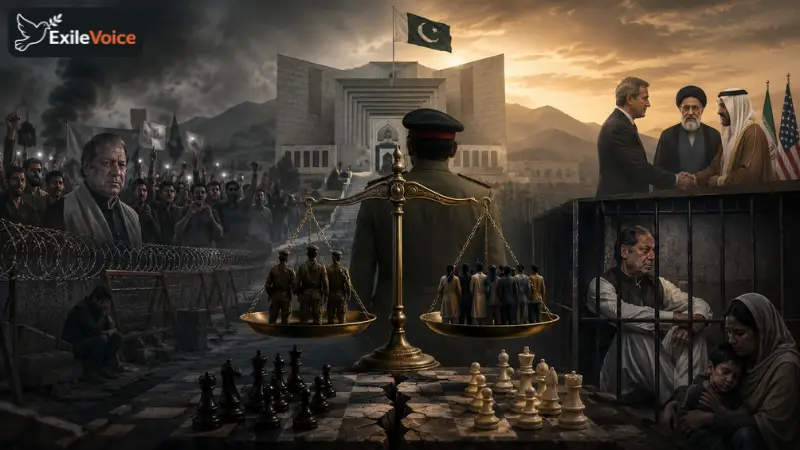
Pakistan currently faces a complex period of governance defined by significant political and social tensions. Observations from recent events suggest that the intersection of military influence and civilian governance continues to shape the domestic landscape, with international observers, such as The Economist, increasingly characterizing the current administration as a de facto regime. This term refers to situations where, regardless of legal legitimacy, actual control is exercised by non-elected or retired officials, creating a disconnect between formal institutional roles and the exercise of power.
A central theme in the current discourse is the impact of this governance style on human rights and political freedom. Reports consistently highlight concerns regarding the suppression of dissent, with critics of the establishment often facing multifaceted pressures. These pressures frequently manifest as allegations of corruption, legal challenges, and, in increasingly documented cases, the targeted release of sensitive or compromising material designed to malign personal character. This pattern of behavior is perceived by many observers as a strategic tool to delegitimize opposition voices and discourage broader public criticism.
The treatment of high-profile political figures remains a contentious issue. The prolonged detention of senior politicians without conviction, coupled with reports of deteriorating health and restricted access to medical care, has intensified public frustration. These instances are often viewed by supporters of the opposition as evidence of a systemic attempt to neutralize key political leaders. Furthermore, the administrative handling of civic issues, ranging from reports of corruption in pilgrimage logistics to the heavy-handed response to minor incidents, such as the removal of political banners, suggests a heightened state of sensitivity to public displays of opposition.
Internationally, Pakistan is navigating a dual identity. While it engages as an active mediator in high-stakes regional diplomacy, such as the Iran-US nuclear talks, these external diplomatic efforts are starkly contrasted by internal challenges. The perception that international prestige is being prioritized while domestic governance remains exclusionary has created a palpable sense of alienation among the populace. This dynamic is further complicated by the political leadership's apparent resistance to institutional turnover, with many in positions of influence remaining in power well beyond their expected tenures, either through extensions or by consolidating control over administrative divisions.
As the country moves forward, the central challenge remains the reconciliation of these domestic governance issues with the aspirations of its citizens. The contrast between international diplomatic success and the reality of political repression continues to fuel debate about the future of democratic institutions and the rule of law within the country.

