

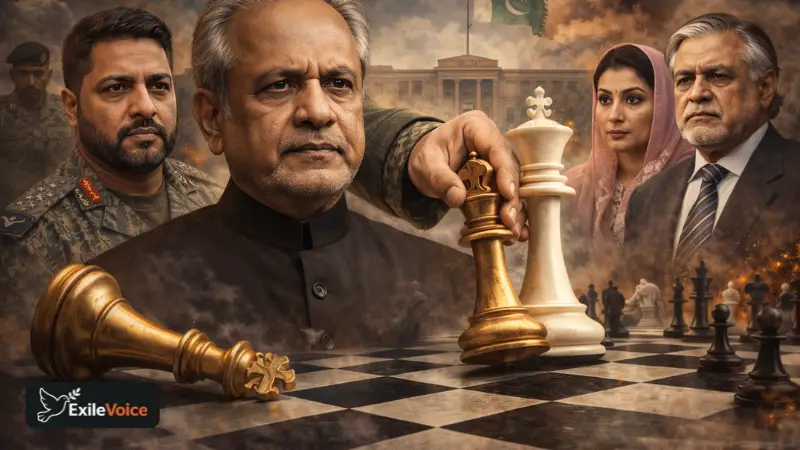
The recent removal of Kamran Tessori as the Governor of Sindh and the subsequent appointment of Nihal Hashmi of the PML-N marks a pivotal moment in Pakistan's internal political struggles. This move, announced by Ishaq Dar, is not merely a routine administrative shuffle but a calculated maneuver within the complex power dynamics of "Form 47" governance. Tessori, widely perceived as a figure close to the military establishment,specifically Major General Faisal Naseer was replaced following a series of controversial public relations stunts, ranging from cash prize offers on social media to highly publicized food distributions at the Governor House. While these actions were framed as public service, they were increasingly viewed as a challenge to the established political hierarchies, particularly threatening the influence of figures like Maryam Nawaz.
The transition to Nihal Hashmi brings a staunch PML-N loyalist into a critical provincial role. Hashmi’s past rhetoric, which has at times been sharply critical of both the judiciary and the military leadership, highlights the establishment's current preference for "management" over ideological consistency. The military's willingness to oversee the appointment of a figure who once issued veiled threats against those seeking accountability from the Sharif family suggests a pragmatism driven by immediate strategic needs. In this environment, loyalty and the ability to safeguard financial interests outweigh past grievances.
The underlying tension driving this change is the proposed 28th Constitutional Amendment. The military establishment is keen on revisiting the 18th Amendment to gain greater control over provincial resources, particularly the substantial funds currently held by Sindh. President Asif Ali Zardari’s resistance to these fiscal incursions led to a standoff, with Tessori becoming the "sacrificial lamb" in a broader negotiation. By replacing Tessori with a PML-N nominee, the establishment has essentially signaled a reconfiguration of the deal with Zardari. This political "dhobi patka" (wrestling move) ensures that the discourse remains centered on administrative control while the real battle over the NFC award and provincial autonomy continues behind closed doors.

