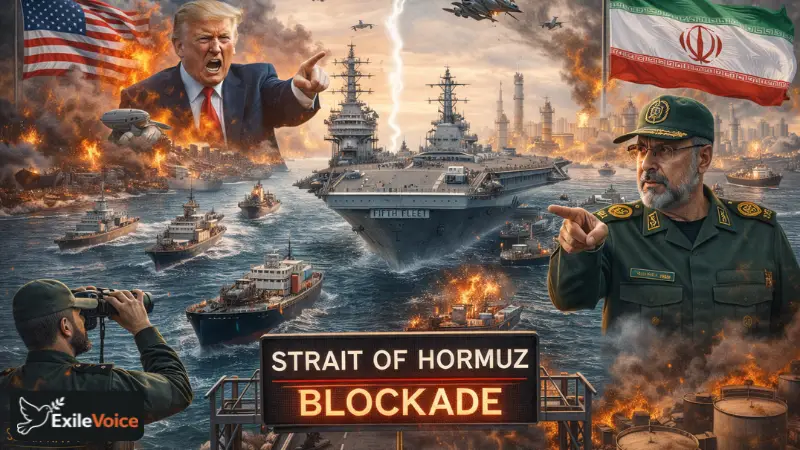
The geopolitical landscape has shifted dramatically following the collapse of the initial phase of negotiations in Islamabad between the United States and Iran. President Donald Trump has moved from the diplomatic table to a posture of "hardball," effectively signaling that the window for immediate compromise has closed. The most significant fallout of this strategic pivot is the official announcement of a comprehensive naval blockade of the Strait of Hormuz, scheduled to take effect imminently. This move, driven by the U.S. Navy's Fifth Fleet, represents a "maximalist" approach intended to choke off Iranian oil exports and force Tehran back to the table under strictly American terms.
The Strait of Hormuz is widely recognized as the world's most critical energy chokepoint. Approximately one-fifth of the world's total petroleum consumption passes through this narrow waterway daily. By enforcing a blockade, the U.S. is not merely targeting Iran; it is indirectly impacting every major global economy that relies on Middle Eastern energy, including China and India. Iranian officials, such as Mohammad Bagher Ghalibaf, have already responded with stark warnings to the American public, suggesting that the era of affordable energy is over. They argue that the U.S. leadership's actions will lead to a domestic economic backlash as fuel prices soar beyond sustainable levels.
This confrontation has been described as a "threshold for pain" contest. While the United States possesses overwhelming military superiority and a massive economy, its democratic structure makes it sensitive to market volatility and public disapproval. Conversely, Iran’s centralized, authoritarian regime maintains a tighter grip on domestic dissent and has historically demonstrated a high tolerance for economic hardship in pursuit of strategic goals.
The immediate danger lies in the potential for rapid escalation. Iran has already released footage from its naval forces (Sepah Navy) warning international vessels to keep their distance, stating they are prepared to open fire without warning. If the U.S. blockade is met with Iranian strikes on regional infrastructure, such as the Fujairah pipelines in the UAE or Saudi Arabia’s East-West pipeline—the conflict could spiral into a full-scale regional war. Such a scenario would render the 15-day ceasefire agreement moot and likely draw other regional players into the fray.