

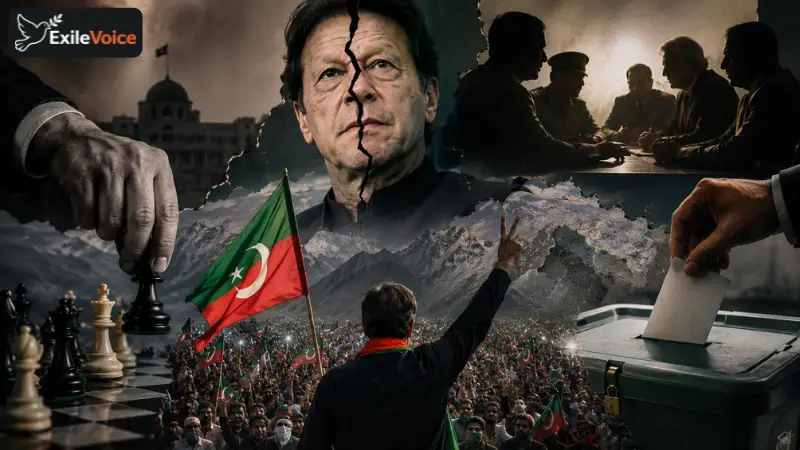
The political landscape of Pakistan has experienced another tremors following the recent regional elections in Gilgit-Baltistan. While local voters turned out in significant numbers to cast their ballots, the aftermath of the electoral process has exposed deep ideological and strategic fractures within the Pakistan Tehreek-e-Insaf (PTI). The paradox of the situation lies in a stark contradiction: independent observers and the public claim a decisive mandate for the party, yet key elements within the party's own central information apparatus are downplaying the victory.
Independent political analysts and ground-level reports initially suggested that the public sentiment heavily favored the incarcerated former Prime Minister Imran Khan, translating into a substantial lead on Form 45s across the region. Even the official state machinery tentatively acknowledged that PTI-backed independent candidates and their allies, such as the Majlis Wahdat-e-Muslimeen (MWM), secured a major chunk of the 24 available seats, positioning them as the single largest political bloc. However, a controversial leaked audio conversation, attributed to PTI Information Secretary Sheikh Waqas Akram, revealed an internal assessment that completely contradicts the public narrative. In the recording, Akram explicitly states that the party only managed to secure one or two seats, dismissing claims of a larger victory as external rhetoric and placing the blame for a dismal performance on the former regional Chief Minister, Khalid Khurshid.
This internal dismissal of public mandate raises critical questions about political engineering and backend negotiations with the military establishment. The region’s Chief Election Commissioner, Raja Shahbaz Khan, announced a 14-day delay in finalizing the official results for a voter population that barely equates to a single provincial assembly constituency in Punjab. Observers argue that this prolonged timeline was intentionally created to facilitate political horse-trading, allowing traditional rival parties like the Pakistan Peoples Party (PPP) and the Pakistan Muslim League-Nawaz (PML-N) to inflate their numbers and form a coalition government.
The public confusion was further magnified when PTI Chairman Barrister Gohar Ali Khan held a press conference to claim victory on only eight seats, mirroring the conservative estimates provided by state institutions rather than the higher numbers reported by independent polling watchdogs. This alignment with official figures, combined with the leaked audio, indicates that elements within PTI's current leadership may be prioritizing a policy of appeasement or survival over defending their actual electoral footprint. By failing to ownership of the public's vote, the current leadership risks alienating a highly resilient voter base that braved state pressure to support the party's narrative.

