

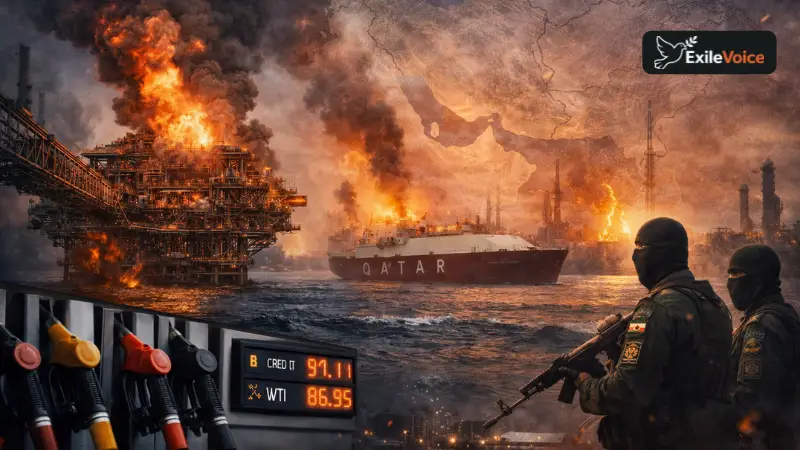
The landscape of conflict in the Middle East has undergone a fundamental shift, moving beyond traditional military targets to focus on the high-stakes arena of energy infrastructure. Recent reports indicate that Israeli forces have initiated a series of strikes against Iran’s South Pars gas field, a critical energy hub located in the Persian Gulf. This field is not merely a domestic asset; it is a vital artery for the region, supplying essential energy to both Iran and Iraq. The immediate fallout of these strikes has been the plunging of vast regions into darkness, as Iraq’s power generation is heavily dependent on Iranian gas.
Historically, global powers, including the United States, have cautioned against targeting energy installations due to the catastrophic ripple effects on the global economy. Even during previous high-tension events, such as the strikes on Kharg Island, there was a concerted effort to distinguish between military structures and oil and gas facilities. However, the current trajectory suggests that these "red lines" are being blurred. The strategic logic behind targeting these sites is to cripple the economic backbone of an adversary, but the consequences are rarely contained within a single border.
In response to the strikes on South Pars, the Islamic Revolutionary Guard Corps (IRGC) has issued warnings that energy installations across Saudi Arabia, Qatar, the UAE, Kuwait, and Bahrain are now considered legitimate targets. This horizontal escalation serves a specific purpose: to force the international community, particularly Western nations, to feel the tangible pain of the conflict through rising energy costs. By threatening the infrastructure of regional neighbors that host or support military operations, the conflict is being projected into the global trade and commercial spheres.
For professional analysts and business leaders, this represents a new phase of risk management. The "energy war" has already impacted global benchmarks, with Brent crude and West Texas Intermediate (WTI) showing significant price increases. For the end consumer, this translates to higher costs at the pump and increased manufacturing expenses. The deliberate targeting of world-class energy ecosystems signifies that the conflict has evolved into a war of attrition where the primary weapon is the disruption of the global supply chain.

