The current conflict in the Middle East, characterized by the confrontation between the United States, Israel, and Iran, is rapidly dismantling the long-standing security framework of West Asia. Historically, the Gulf Cooperation Council (GCC) nations have relied heavily on the United States for their external security. However, as the conflict intensifies and the Trump administration adopts a more aggressive military posture, including the targeting of Iran’s Kharg Island and military installations, a profound realization is dawning upon regional capitals: the era of absolute American security guarantees may be drawing to a close.
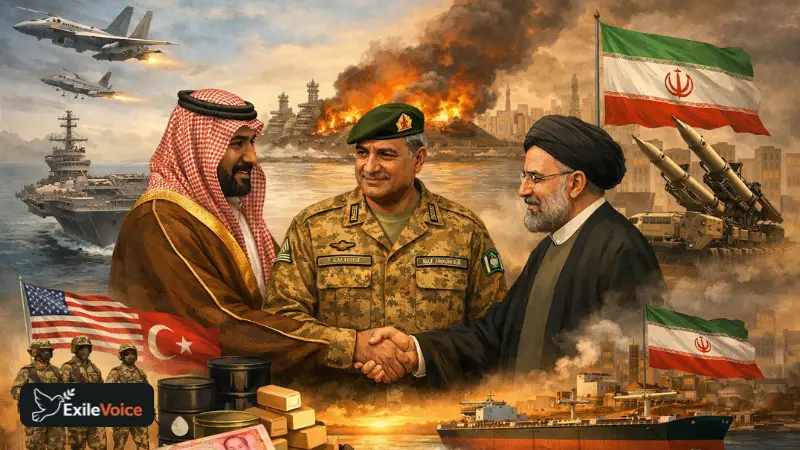
In this vacuum, a new strategic landscape is emerging. Insights from prominent defense analysts suggest that Pakistan is playing a sophisticated dual-role that could redefine its regional influence. Recent high-level meetings in Saudi Arabia involving Pakistani Prime Minister Shehbaz Sharif and Army Chief General Asim Munir with Crown Prince Mohammed bin Salman (MBS) indicate a shift toward active mediation. While official narratives often emphasize mutual defense pacts between Islamabad and Riyadh, the underlying reality appears to be a delicate balancing act. Pakistan is positioning itself as a vital bridge between Saudi Arabia and Iran, seeking to prevent a total regional conflagration that would devastate the global energy market.
The significance of this mediation is underscored by Iran’s reported concession to allow Pakistan-bound oil tankers safe passage through the Strait of Hormuz. This gesture of trust signifies that despite Pakistan's deep-rooted economic and military dependence on the West, it has maintained a level of diplomatic credibility with Tehran that other regional players have lost. Furthermore, if the GCC countries conclude that American protection is becoming too volatile or costly, they may look toward a regionalized security arrangement. This "Asianization" of Middle Eastern security could see Pakistan, Turkey, and perhaps Egypt providing the boots on the ground and tactical expertise that were once the domain of Western powers.
The economic dimension of this shift is equally seismic. The threat to the "petrodollar" is no longer a theoretical concern. Iran’s proposal to settle oil payments in Chinese Yuan rather than US Dollars, if adopted by other major producers, would strike at the heart of American global financial hegemony. While the US military remains an unrivaled force, its ability to dictate terms to a multipolar world is being tested by the combined resilience of Russia, China, and Iran. As the dust settles from the current kinetic phase of the war, the world may witness a West Asia where security is negotiated locally and financed through a diversity of global currencies.