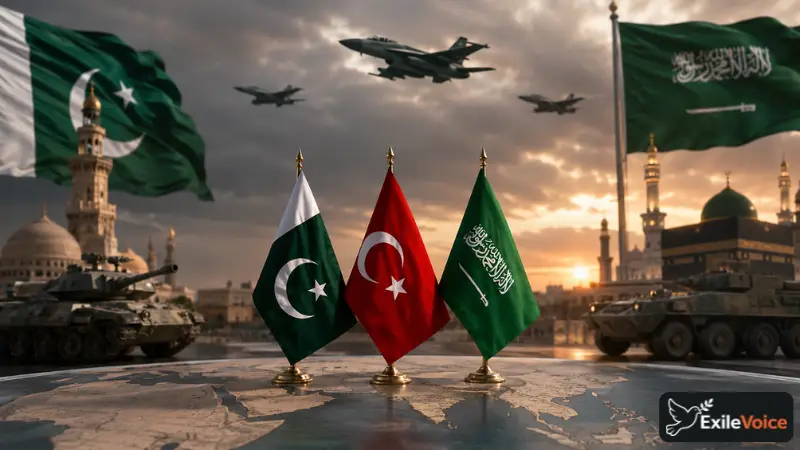
Recent geopolitical developments have brought the strategic defense framework involving Pakistan, Turkey, and Saudi Arabia under intense international scrutiny. While political rhetoric surrounding the alliance often portrays it as a monumental step toward Islamic solidarity and regional defense integration, differing official narratives and regional responses suggest a complex underlying reality.
Turkish leadership has framed the pact as an inclusive initiative open to wider Muslim participation, intended to foster collective security. However, statements from Saudi officials offer a more nuanced perspective, clarifying that the framework functions primarily as a coordination mechanism rather than a conventional sectarian military alliance or a mutual defense force. This divergence in articulation has raised questions regarding the tangible scope and operational objectives of the agreement.
Externally, the pact has elicited cautious observation from neighboring powers. Regional actors, including Iranian parliamentary representatives, have expressed skepticism regarding the long-term security guarantees offered by the agreement, suggesting that strategic alignments must be backed by broader policy adjustments. Similarly, international monitors, such as Indian diplomatic spokespersons, are closely evaluating the strategic implications of the tripartite arrangement, particularly concerning regional stability and deterrence dynamics.
Domestically, discussions surrounding the defense pact intersect with broader economic expectations within Pakistan. Observers note that while the agreement was initially anticipated by some sectors to yield substantial economic inflows or financial stabilization, immediate tangible relief remains limited. Consequently, the alliance continues to be analyzed through a dual lens of geopolitical posturing and economic pragmatism, reflecting the intriate challenges of modern statecraft in South Asia and the Middle East.