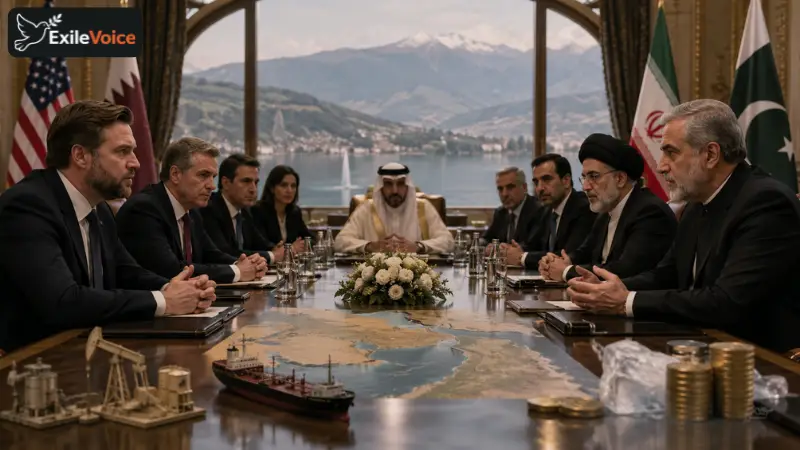
The recent diplomatic summit in Switzerland, aimed at brokering peace between the United States and Iran, marks a significant shift in regional dynamics. With high-level delegations, including US Vice President JD Vance and Iranian officials, the focus has shifted from immediate conflict to complex negotiations regarding financial assets and nuclear protocols. The presence of international mediators, particularly Qatar, has been pivotal in facilitating these talks, overshadowing Pakistan’s initial role as the primary venue for these discussions.
The negotiations, projected to last 60 days, address critical issues such as the unfreezing of Iranian assets, estimated at $300 billion, and the establishment of a new administrative framework for the Strait of Hormuz. Iran insists on a departure from the pre-conflict status quo, proposing joint management of this vital trade artery.
The diplomatic interactions highlight the intensifying reliance of the US administration on Pakistan’s military leadership. Vice President Vance’s remarks underscore a robust, direct line of communication between Washington and the Pakistani military establishment, framing these relations as essential to managing regional stability. However, while these negotiations aim to mitigate global inflationary pressures, particularly concerning oil and energy markets, the tangible economic benefits for Pakistan remain uncertain. Despite the diplomatic heavy lifting, Pakistan faces ongoing internal economic challenges, including persistent inflation and IMF-related fiscal pressures, suggesting that the "brokering" role may not yet have yielded the expected national dividends.