

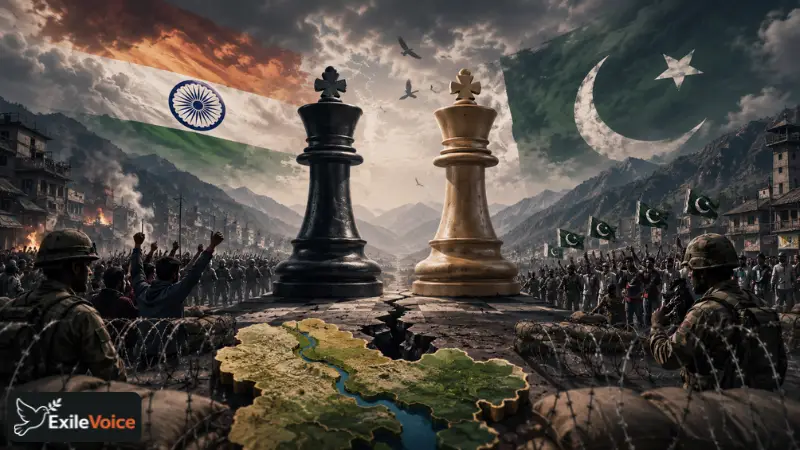
The geopolitical landscape surrounding the Kashmir region is undergoing a significant transformation as both India and Pakistan adopt new strategic postures. Recent reports indicate a shift in how these neighboring nations view domestic unrest and external influence. Notably, India’s National Investigation Agency (NIA) has recently filed a chargesheet naming Hafiz Saeed in connection with the Pahalgam terror incident. This development, occurring several months after initial investigations, suggests that Indian security agencies are reassessing the operational status of key figures previously thought to be incarcerated.
Simultaneously, tensions in Pakistan-administered Kashmir have escalated following a crackdown on the Joint Awami Action Committee (JAC). Authorities have alleged that the movement, which led to significant asset damage, was influenced by foreign actors, pointing to a complex web of blame that complicates local governance. Furthermore, the decision-making process within the Pakistan Tehreek-e-Insaf (PTI) party regarding participation in upcoming Azad Kashmir elections has raised questions about political autonomy. Barrister Gohar’s recent pivot, suggesting potential participation despite an earlier boycott, highlights the pressure on political entities to align with the overarching goals of the establishment.
These maneuvers reflect a broader, more opaque struggle for influence. As historical alliances and enmities are tested, the international community remains watchful. The intersection of domestic protests, investigative shifts, and electoral strategy suggests that the next few weeks will be critical in determining the future trajectory of Kashmiri politics and the stability of the region. Experts emphasize that the "two plus two" logic of past decades no longer applies, and stakeholders must monitor these evolving developments to understand the underlying power dynamics.

