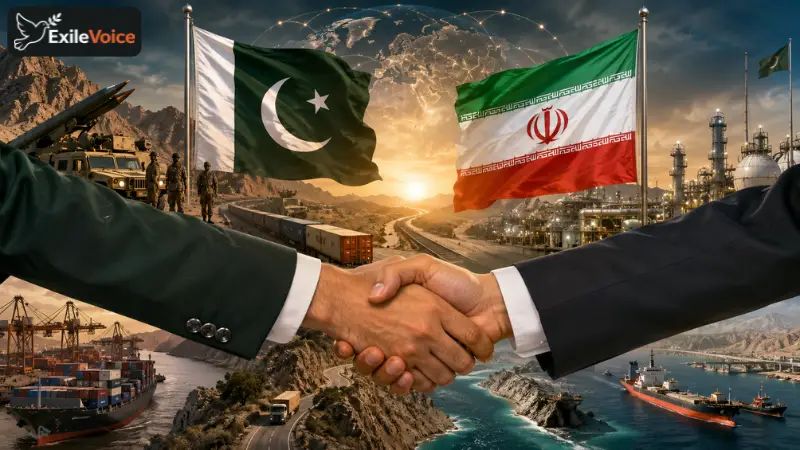
The geopolitical landscape of South Asia and the Middle East is witnessing profound shifts, highlighted by high-level diplomatic engagements between Pakistan and Iran. Recent high-profile visits, including Iranian Interior Minister Eskandar Momeni’s extensive meetings in Islamabad with civilian and military leadership, underscore a deepening of strategic and institutional ties. These discussions go beyond standard diplomatic courtesy, reflecting a convergence of deep-state interests as both nations navigate the turbulence of renewed regional conflicts.
Historically, the connection between Pakistan's security apparatus and Iran has deep roots, tracing back decades through defense and nuclear-related cooperation. Analysts point out that Pakistan played a foundational role in the technological evolution of Iran's nuclear infrastructure during the late 1980s and 1990s, forging a historical bond between the respective security establishments. In the present day, as major powers recalibrate their strategies and regional infrastructure faces unprecedented pressure, the coordination between Islamabad and Tehran assumes critical importance.
The broader regional conflict, exacerbated by escalating military actions involving the United States and its allies, has placed vital trade and energy corridors under immense strain. The strategic closure of vital maritime chokepoints, such as the Strait of Hormuz and the Bab-el-Mandeb strait through regional proxies, has disrupted global supply chains and forced a reevaluation of foreign military footprints across the Gulf. With traditional American military bases in the region facing continuous security challenges and withdrawals, regional actors are increasingly looking toward indigenous frameworks for security and stability.
Experts suggest that these bilateral and multilateral dialogues are laying the groundwork for a new security architecture in the Muslim world. With emerging cooperative frameworks involving key regional heavyweights, such as Turkey, Saudi Arabia, Egypt, and Pakistan, the region is moving toward self-reliant security paradigms. Pakistan’s unique position as a nuclear-armed state with a battle-hardened conventional military positions it as a vital security provider capable of bridging divides and balancing influence amidst shifting global superpowers.