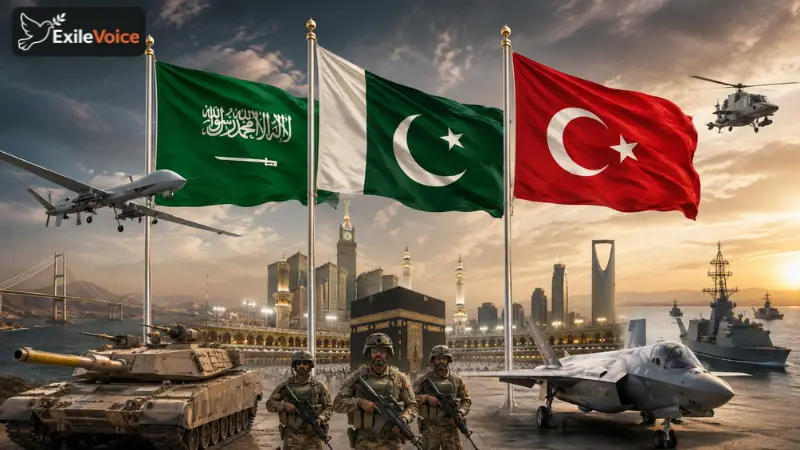
The recent signing of a trilateral defense agreement between Saudi Arabia, Pakistan, and Turkey in Makkah marks a significant pivot in West Asian and Middle Eastern geopolitics. Formulated against a backdrop of escalating regional tensions involving Iran, the Houthis in Yemen, and shifting United States policies under President Donald Trump, this strategic pact addresses deep-seated security anxieties among Gulf monarchies. While official texts remain sparse, regional analysts and state declarations frame the treaty as a mutual defense framework intended to project a unified posture. This development brings together Saudi financial resources, Turkish defense technology, and Pakistan's combat-tested military apparatus, drawing widespread international scrutiny regarding its strategic implications and long-term viability.
A primary driver behind the Makkah agreement is the acute sense of insecurity within Saudi Arabia regarding regional stability and the unpredictable nature of external security guarantees. Crown Prince Mohammed bin Salman has navigated a complex landscape where US policy shifts create strategic volatility, exemplified by fluctuating defense and nuclear cooperation commitments. Furthermore, the persistent threat landscape posed by Houthi actions in Yemen and the broader fallout from US-Iran escalations have left Gulf economies vulnerable to retaliatory economic and infrastructural impacts. By anchoring the defense pact in Makkah, Saudi leadership has infused the agreement with profound moral and political weight, seeking to solidify commitments from key regional actors while hedging against potential shifts in Western security umbrellas.
For Turkey, participation in the trilateral pact aligns with Ankara's broader foreign policy trajectory to expand its strategic footprint in the Middle East and leverage its defense manufacturing capabilities, particularly in unmanned aerial systems and industrial infrastructure. Turkish leadership views the alliance as an avenue to consolidate its geopolitical standing as a major regional power. However, internal political dynamics within Turkey, including leadership succession debates and ongoing economic considerations, introduce complex domestic variables into Ankara's foreign engagements. Similarly, Pakistan's involvement reinforces its historical bilateral ties with Riyadh, offering Islamabad diplomatic leverage and international positioning amidst severe domestic economic and security challenges.
Ultimately, the trilateral defense pact underscores a growing trend among Middle Eastern and South Asian states toward minilateral security arrangements designed to insulate regional actors from external volatility. While questions remain regarding the operational mechanisms of mutual defense and the specific capabilities each nation can project across contested maritime and land corridors, the agreement serves as a potent diplomatic signal. As regional stakeholders grapple with the competing pressures of US policy unpredictability and persistent security flashpoints in the Red Sea and the Strait of Hormuz, the Makkah pact represents a calculated effort to institutionalize regional deterrence and political solidarity.