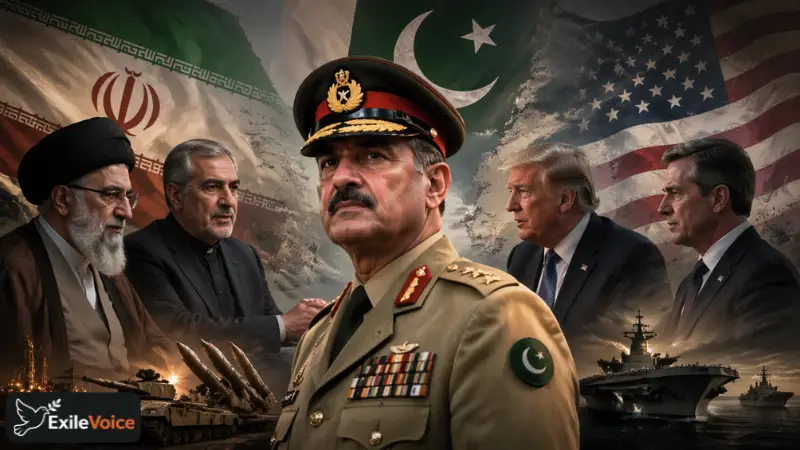
In a surprising turn of international diplomacy, General Asim Munir, Pakistan’s Chief of Army Staff, has emerged as a central figure in the mediation between Tehran and Washington. While Western media outlets profile him as a "soldier-statesman" capable of navigating the ego of Donald Trump and the hardline stances of the Iranian leadership, a deeper analysis reveals a complex paradox. Pakistan is not a distant, neutral observer like Switzerland; it is a nation structurally and geographically entangled in the very fire it is trying to extinguish.
The Architect of Access General Munir’s rise as a mediator is fueled by his unique resume. Having served as the head of both Military Intelligence (MI) and the Inter-Services Intelligence (ISI), he possesses the "whole-of-state" connections necessary to talk to both the mullahs in Tehran and the generals in the Pentagon. His ability to switch from a military uniform to a blazer for diplomatic lunches has made him "indispensable" in the current crisis. President Trump even credited the Pakistani leadership for his decision to extend certain tactical pauses in the conflict.
The Fragility of Neutrality Despite the "peace-maker" branding, Pakistan’s neutrality is heavily compromised by its dependencies. The nation relies on the "Sugar Daddy" economics of Gulf states, specifically Saudi Arabia and the UAE, for oil and financial bailouts. Simultaneously, it is tethered to IMF programs and US diplomatic support. When Pakistan moves a division of troops to Saudi borders while claiming to mediate for Iran, it sends a conflicting signal that Tehran is unlikely to ignore.
The Internal Legitimacy Gap The greatest challenge to General Munir’s international standing is the stark contrast with his domestic policy. While he is celebrated abroad as a problem-solver and a crisis manager, his domestic critics point to a "broken" Pakistan characterized by silenced media, judicial interference, and political instability. For a leader to be a credible broker of peace abroad, his "house" must eventually be in order. The "Pragmatism" often cited by the Pakistani elite, the strategy of managing external wars while tightly controlling internal dissent, is a high-stakes gamble that could either solidify Pakistan’s role in the new world order or leave it dangerously exposed if the mediation fails.