

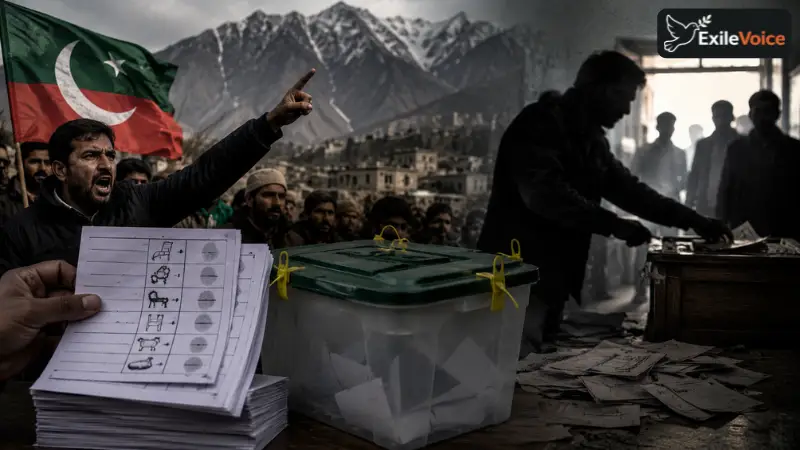
The recent electoral process in Gilgit-Baltistan has been marked by significant controversy, with the Pakistan Tehreek-e-Insaf (PTI) party declaring a victory while simultaneously leveling serious allegations of systemic rigging. Despite early indications and celebrations by PTI supporters, supported by the circulation of Form 45 documents on social media indicating a strong lead, subsequent reports from mainstream media outlets suggested a shift in the results, positioning the Pakistan Peoples Party (PPP) at the forefront.
The situation escalated as reports emerged of unidentified individuals gaining access to polling stations and returning officer (RO) offices, a development captured in videos disseminated by the PTI. These irregularities, combined with the sealing of election offices and delays in the announcement of official results, have fueled skepticism regarding the transparency of the process. Observers note a stark contrast between the early optimistic trends for PTI and the finalized, yet unofficial, results being broadcast by mainstream media.
Compounding the tension are shifting political alliances. Notably, the rhetoric between PPP and Pakistan Muslim League-Nawaz (PML-N) representatives, previously highly antagonistic, underwent a rapid de-escalation. Analysts suggest that behind-the-scenes negotiations, potentially regarding budget support, may have influenced this change in narrative. The exclusion of PTI from a broader share of the seats, as reflected in current unofficial tallies, has led to further accusations of a pre-arranged political deal designed to marginalize PTI’s influence in the region. As the situation develops, the focus remains on the veracity of the provided evidence of malpractice and the implications for democratic legitimacy in Gilgit-Baltistan.

