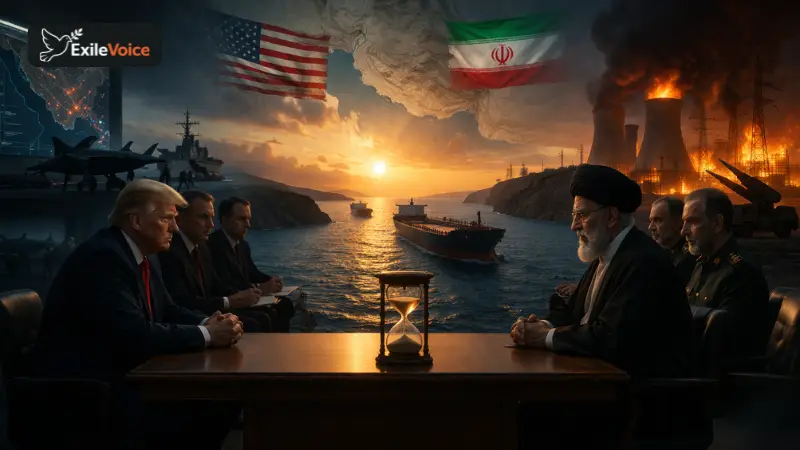
In a move that has temporarily halted the march toward a catastrophic regional war, U.S. President Donald Trump announced on Monday, March 23, 2026, a five-day postponement of planned military strikes against Iranian power plants and energy infrastructure. The decision follows what the President described on Truth Social as "very good and productive" conversations aimed at a "complete and total resolution" of hostilities in the Middle East. This reprieve comes at the eleventh hour, just as a 48-hour ultimatum for Iran to reopen the Strait of Hormuz was set to expire.
The stakes could not be higher. For the past three weeks, the "U.S.-Israeli war on Iran" has disrupted global energy markets and pushed the region to an inflection point. Iran’s closure of the Strait of Hormuz, a critical maritime artery through which one-fifth of the world’s oil passes, sent crude prices soaring to $113 per barrel. Following Trump's announcement of the five-day pause, markets reacted with cautious optimism, with oil prices retreating to approximately $101 per barrel.
However, the "productive" nature of these talks is a matter of intense debate. While the White House signals a potential breakthrough, Iranian state media has characterized the move as Trump "backing down" following firm warnings from Tehran. Iran’s Defense Council had earlier warned that any attack on its domestic power grid would trigger immediate retaliatory strikes against energy and water infrastructure across the Gulf, potentially plunging the entire region into darkness.
The diplomatic landscape remains fractured. While U.K. Prime Minister Keir Starmer welcomed the de-escalation, Iranian officials continue to deny that direct negotiations with the U.S. are taking place. Instead, intermediaries like Turkey are reportedly playing a crucial role in relaying messages. The next 120 hours will determine whether this is a genuine pivot toward peace or merely a tactical pause before a larger confrontation that could redefine the modern Middle East.