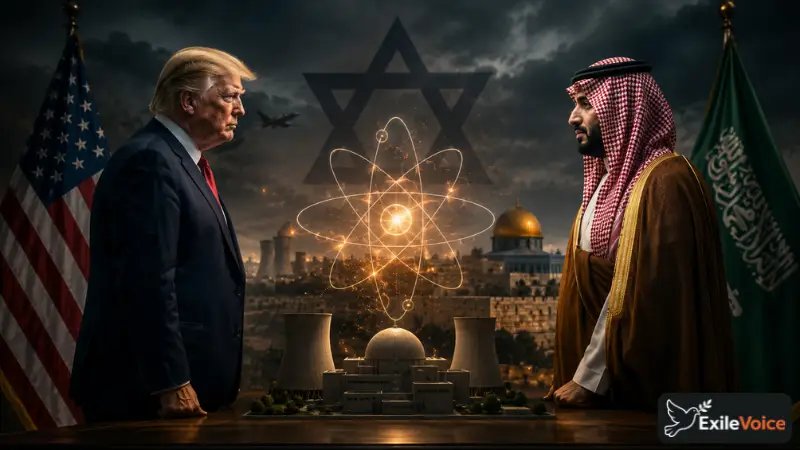
In a surprising shift in United States foreign policy dynamics, President Donald Trump announced that any comprehensive nuclear deal with Saudi Arabia is off the table unless the Kingdom officially recognizes Israel and joins the Abraham Accords. This dramatic reversal comes shortly after high level discussions appeared to make headway regarding a potential civil nuclear cooperation agreement between Washington and Riyadh.
According to reports, the decision has caused significant internal scrambling within the White House as press secretary Karoline Leavitt addressed persistent questions from reporters attempting to reconcile the sudden shift with ongoing negotiations. While the administration previously focused heavily on the strategic energy and security frameworks of the partnership, intense pressure from pro Israel lobbies and regional security concerns ultimately shifted the diplomatic calculus.
Israeli intelligence and political leadership have consistently emphasized that long term regional stability requires deep structural acceptance and integration from neighboring Arab states. From Israel's perspective, while the technological and prestige aspects of Saudi Arabia acquiring advanced nuclear capabilities present distinct considerations, the absence of full diplomatic recognition remains a critical vulnerability. Without formal acceptance by key regional powers, the long term viability of Israel within the Middle East faces ongoing uncertainty, especially amid shifting generational attitudes toward foreign policy within Western nations.
Meanwhile, Saudi Arabia has maintained a steadfast position regarding the Palestinian issue, reiterating that any normalization of relations must be tied to a transparent and viable path toward a two state solution. As these diplomatic fault lines collide, the high stakes nuclear agreement hangs in the balance, illustrating the intricate web of regional security, political prestige, and international alliances.