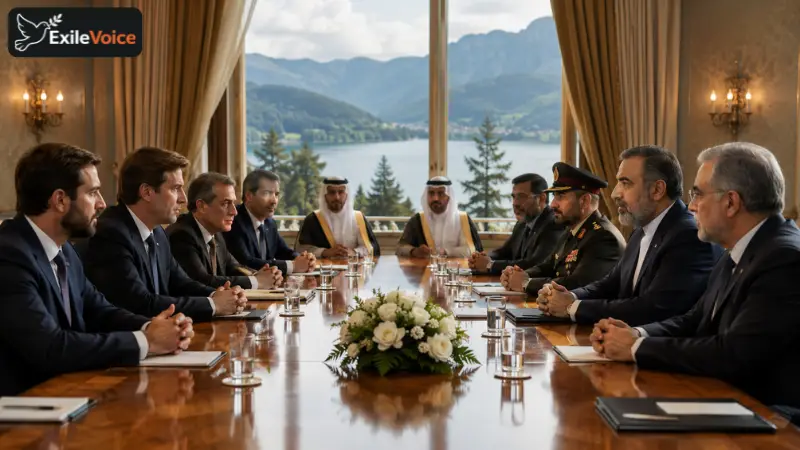
As of June 21, 2026, the diplomatic landscape in the Middle East has shifted dramatically towards Switzerland, where high-stakes negotiations between the United States and Iran are underway at the Bürgenstock Palace, a Qatari-owned property in Lucerne. This process represents a critical effort to de-escalate regional tensions, despite fierce opposition from the Israeli lobby and ongoing volatility in Lebanon.
The U.S. delegation, featuring Vice President JD Vance and high-level advisors such as Jared Kushner and Steve Witkoff, is engaged in complex discussions with Iranian representatives, led by Parliament Speaker Mohammad Bagher Ghalibaf and Foreign Minister Abbas Araghchi. The involvement of Qatari mediators, alongside the arrival of a Pakistani delegation led by Prime Minister Shehbaz Sharif and Army Chief General Asim Munir, underscores the international gravity of these talks.
At the core of the negotiations is a 14-point agenda that includes a long-awaited ceasefire in Lebanon. Israel, while currently maintaining a six-mile "safe corridor" in southern Lebanon, faces pressure from the U.S. to adhere to these terms. The international community is actively influencing Israel to prevent the expansion of conflict theaters.
Furthermore, the status of the Strait of Hormuz remains a focal point. While Iranian military officials have threatened to close the strait due to perceived lack of implementation of agreements, the U.S. Central Command maintains that the passage remains open. The discussions in Switzerland are attempting to finalize a structure for this maritime route that ensures stability for global energy shipments. As the geopolitical situation evolves, the successful navigation of these talks could mark a significant turning point in U.S.-Iran relations, challenging the established influence of traditional lobbies and paving the way for a more stable regional order.