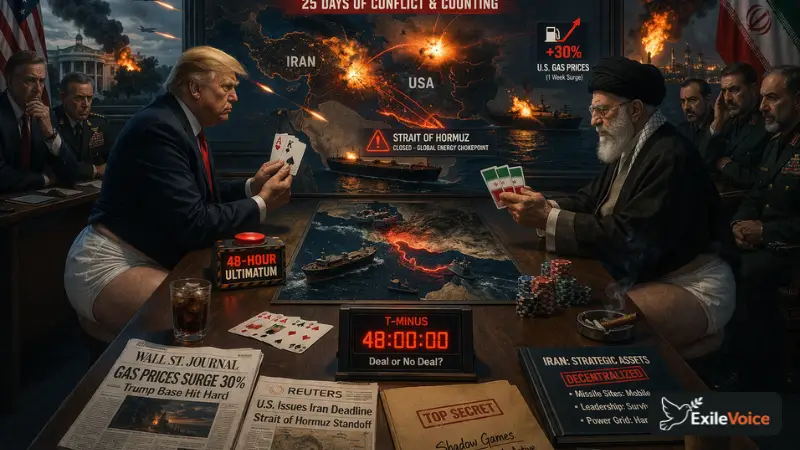
The geopolitical landscape of the Middle East is currently witnessing what can only be described as "diaper diplomacy", a high-stakes game of chicken where major powers are navigating a minefield of military strikes, economic threats, and last-minute ultimatums. As the conflict enters its 25th day, the unpredictability of the Trump administration’s approach has left global markets and regional players in a state of constant flux.
The strategy employed by Donald Trump involves a blend of devastating military force and abrupt diplomatic openings. After a series of intense strikes that targeted Iranian military infrastructure, naval assets, and leadership, the administration issued a 48-hour deadline for Iran to reopen the Strait of Hormuz. This ultimatum was not merely a military threat but a direct response to the economic strangulation caused by skyrocketing energy prices. In the United States, gasoline prices have surged by over 30% in a single week, particularly hitting the Southern "Trump base," forcing the President to shift from a purely kinetic approach to a "deal-maker" persona.
This tactical recalibration is driven by the realization that while military superiority is absolute, the economic fallout is unsustainable. The closure of the Strait of Hormuz has sent ripples through global energy markets, forcing the U.S. to seek intermediaries who can deliver a face-saving exit for both sides. The current situation is characterized by "shadow games," where both Washington and Tehran are utilizing multiple channels to test the waters of a ceasefire. While Trump claims victory and suggests that talks are progressing, the reality on the ground remains tense as both nations attempt to define the terms of a new regional order.