In a development that mirrors the tension of a high-stakes cinematic thriller, US Special Operations Forces have successfully executed a daring rescue mission deep inside Iranian territory. The operation aimed to recover a high-ranking US service member, identified as a Colonel and a Weapon Systems Officer, who had been missing since their aircraft went down during a combat mission. The success of this extraction provides a significant political and morale boost for the White House during a time of intense regional conflict.
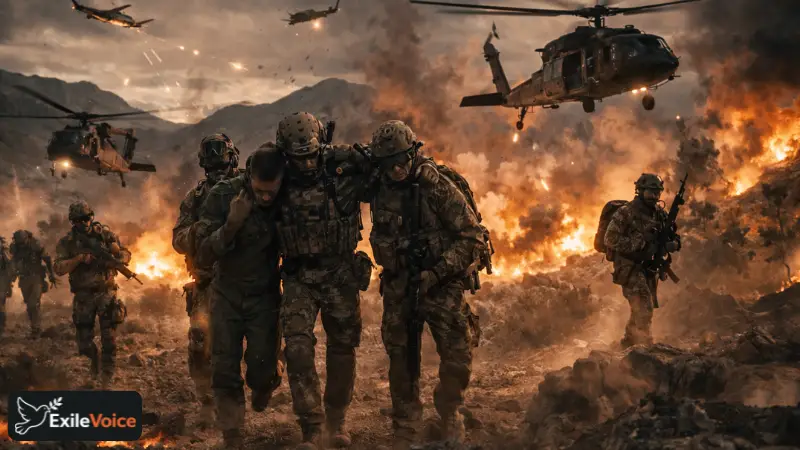
The mission involved hundreds of special operators, including Navy SEALs and potentially Army Rangers, supported by a massive aerial umbrella. To ensure the safety of the ground teams, US Air Force assets conducted heavy suppression bombing in the vicinity to prevent Iranian Regular Forces and IRGC units from closing in on the rescue site. The operation reportedly took place in a rugged, mountainous region bordering the Khuzestan and Boyer-Ahmad provinces.
Initial reports from regional media were vague, suggesting a "severe fire fight" involving unnamed personnel. However, President Trump later took to social media to confirm the success of the mission, hailing it as "one of the most daring commando operations in American history." The rescued officer, who had been evading capture while suffering from non-life-threatening injuries, used specialized communication tools to maintain contact with rescue coordinates throughout the ordeal.
There is significant speculation regarding the role of foreign intelligence in this success. Observers suggest that the precision of the rescue, given Iran's vast and difficult terrain, likely relied on deep-cover intelligence assets. The Israeli Mossad, known for its extensive penetration of Iranian security apparatuses, is rumored to have provided critical signal intelligence or ground-level logistics to assist the American commandos. If confirmed, this collaboration highlights the deep level of integration between US and Israeli tactical operations in the current theatre.
Politically, the recovery of the pilot is a major victory for the administration. Had the officer been captured and paraded on Iranian state television, it would have provided Tehran with immense diplomatic leverage and potentially paralyzed US decision-making. By successfully extracting the Colonel, the US has demonstrated its "combat search and rescue" (CSAR) capabilities under the most hostile conditions, reinforcing a narrative of military decisiveness that is likely to resonate with the domestic electorate and reassure coalition partners.